referent

Category: Listenings

  • Listenings #6: John Frusciante – Inside of Emptiness


    For better or worse, John Frusciante always follows his muse. It led him to join… and then leave… the Red Hot Chili Peppers twice, both times at the height of their superstardom. It led him to follow up the immense mainstream success of the Grammy-winning Blood Sugar Sex Magik with two raw, almost caustic solo records in the ’90s. More recently, it’s taken him deep into challenging hip hop and breakcore-adjacent territory, allegedly going nearly a decade without seriously picking up a guitar. And around 2004–05, it led him to record and release six albums in rapid succession, probably his best work to date, bringing together a set of influences and obsessions he was likely finding hard to express within the Chili Peppers: Bowie/Reed-inspired rock, electronica, Krautrock, garage.

    In 2002 the Chili Peppers released By The Way. For non-fans this album probably represents another collection of funky rock songs about girls, California, universal love, girls and California. And yes, it is that. But to less cynical ears By The Way is distinctive in the Chili Peppers catalogue, marking a turn towards greater songwriting depth and sophistication thanks to Frusciante’s outweighed contribution. The album is awash in his Brian Wilson-inspired vocal harmonies. The chord progressions are rich. The tracks are often thickly layered in guitar effects. ‘Writing By The Way has been one of the happiest times of my life‘ he was quoted as saying upon its release. (The feeling wasn’t entirely mutual, Flea saying later he was on the verge of quitting the band due to feeling sidelined by Frusciante’s torrent of creativity during the writing and recording sessions).

    From Frusciante’s 1994 double-album Niandra LaDes and Unsually Just a T-Shirt. A collection of his lo-fi home recordings featuring raspy falsetto, reversed guitars, tape manipulation. One can’t help draw comparisons with Syd Barrett’s post-Pink Floyd solo work.

    Frusciante’s lyrics through this period, in fact beginning with his excellent 2001 effort To Record Only Water For Ten Days, are preoccupied with ideas of being, death, nothingness, rebirth. It is hard to not receive this in the context of his career trajectory, having returned to his most famous band after a number of years in substance abuse-induced exile.

    His first musical statement upon his return was the extremely successful Californication. Listening back to it in the context of what was to come shortly after (By The Way and the string of solo records) you can hear Frusciante grappling with his somewhat reduced facility on the guitar, opting for simplicity and immediacy on Californication and tonal texture via effects pedals and layering on By The Way. To his great credit he turned a somewhat diminished virtuosity into some of the most iconic riffs and guitar solos of the period… I would think, for example, many non-fans could hum his three Scar Tissue guitar solos note-for-note.

    This Is The Place from By The Way, a great example of Frusciante’s vocal layering, guitar effects and melodic writing.

    By the time it came to 2004 Frusciante had regained his facility on the guitar, now with a suite of effects pedals at his disposal, but he had also found his voice. Beginning with Shadows Collide With People, in many ways a continuation of By The Way, and carrying on to The Will To Death, Inside of Emptiness, A Sphere In The Heart of Silence, Curtains, DC EP and Automatic Writing, he embarked on a remarkably lucid, accessible, assured yet still adventurous period of songwriting defined perhaps most of all by the strength of his vocal performances. It seems that he indeed felt reborn, as his lyrics suggested, and was invigorated by these newly honed or rediscovered skills.
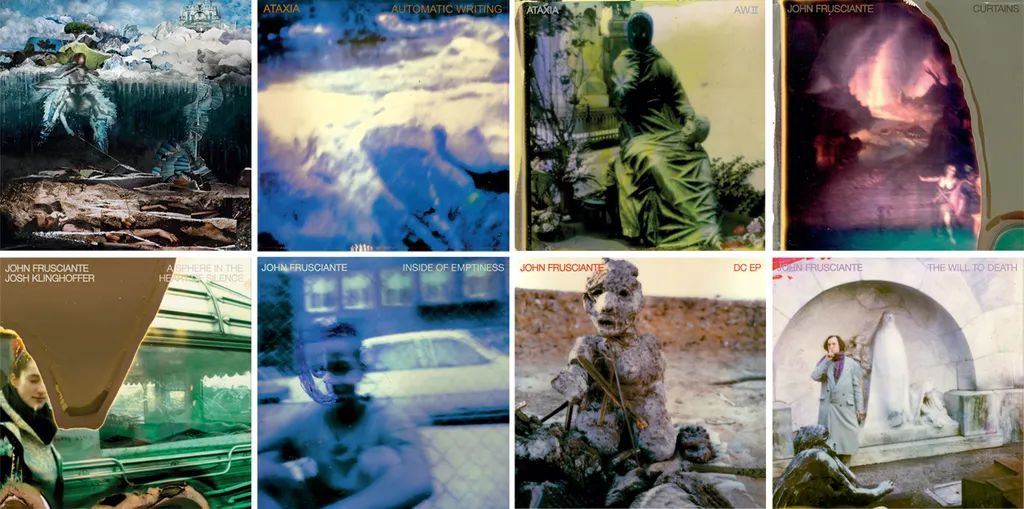
    Just some of the albums or EPs Frusciante put out between 2004-2009

    Inside of Emptiness might be the most straightforward rock album of the batch. While each album contains a great number of strong songs and memorable moments, it is the nature of such a prolific output that there are some songs which are more impactful than others. Inside of Emptiness, however, feels compelling from start to finish, in part perhaps because it has a unity of focus.

    The album begins with What I Saw, which along with songs like The World’s Edge and Emptiness seem like Frusciante’s take on grunge and ’90s alt rock, genres which ran concurrently with his time as a funk rocker. After expressing a distaste for Nirvana particularly in early interviews, Frusciante has since cited Cobain as among his favourite artists. What I Saw especially contains a couple of particularly Nirvana-esque moments, particularly the pre-chorus, but never slips into imitation, especially towards the end where Frusciante gives us one of his signature guitar solos.

    Anyone familiar with the Chili Peppers’ live performances during this period, especially the iconic Slane Castle show, would recognise the What I Saw solo as following a similar approach to the one he was using with the Peppers. Frusciante tends to avoid extended, linear melodies, preferring motifs or energetic ‘guitarisms’, often repeating them four times before moving on. Even when he departs from this pattern, his solos are built around motif development, with ideas rarely discarded unless they’ve been fully mined for all their content, energy, or emotion. This gives his solos a ‘hooky’ quality, as opposed to being purely exploratory or self-indulgent. This approach makes perfect sense in a live context, where Frusciante was the sole guitarist, and with no comping behind him, repetitive, rhythmic, and catchy phrases could carry the song on their own.

    Songs like Interior Two, A Firm Kick, and I’m Around evoke mid-’60s pop, with The Beatles and The Beach Boys as clear touchstones, but there’s also a hint of ’50s doo-wop. The Velvet Underground also left their mark in two ways: first, in the breezy songwriting style of tracks like Interior Two, which recalls the later VU albums, and second, in the album’s production, which strongly echoes the raw, garage-rock feel of their masterpiece White Light/White Heat.

    The album’s centrepiece is Look On, a mid-tempo track that could easily feel like an anthem if not for Josh Klinghoffer’s disjointed, counter-punching drum part (more on his role later). Similar to By The Way’s Don’t Forget Me, it’s one of those slow burners that builds to an almost one-and-a-half-minute guitar solo… arguably one of his best on record. Here, Frusciante steps away from his usual motif development approach, opting instead for a J Mascis-like onslaught of pentatonic melodies and bends. As far as rock solos go it’s a perfect example of how energy, intent, and spirit can elevate even a simple tonal palette into something impactful.

    Josh Klinghoffer plays a significant role on the majority of Frusciante’s albums through this period, to the point that the album A Sphere In The Heart of Silence is co-credited to him. Although he is now best known for his decade-long stint as a Chili Peppers’ guitarist himself, replacing Frusciante post-Stadium Arcadium, he is an accomplished musician and collaborator outside of this context. In particular he served as primary guitarist and part-time drummer for PJ Harvey during her Uh Huh Her tour, which was a great live period for PJ.

    A Perfect Day Elise live featuring Klinghoffer on drums and Simon ‘Ding’ Archer of The Fall, Black Francis’ live band and more.

    Klinghoffer, though best known as a guitarist, takes on the role of drummer across this series of albums and does so brilliantly. His playing has the sensitivity of a songwriter, someone who really inhabits the songs, but there’s also a restless creativity in his approach to the kit. He rarely plays a straight beat, constantly breaking things up with open hi-hat stabs and off-kilter fills. One of the real joys of the album is listening to how his drumming locks in with… and sometimes pushes against… Frusciante’s guitar rhythms. Personally, I’ve found the drumming on Inside of Emptiness deeply influential; it’s a rare mix of groove, invention, and just enough disruption to keep things interesting.

    It’s interesting to contrast Inside of Emptiness, The Will to Death or DC EP, where Klinghoffer is on drums, with Shadows Collide With People, which features Chad Smith. Smith is, of course, excellent… certainly among the pantheon of great rock drummers… but compared to Klinghoffer, he tends to make safer, more expected musical choices. The result is that Shadows feels somewhat middle-of-the-road… the songs are immaculately played, the production is polished, and Frusciante reportedly laboured over every detail… yet it still comes off somewhat weaker than the albums which followed soon after.

    A Firm Kick. A relatively conventional song in the ’60s songwriting mould… listen to how Klinghoffer is able to both maintain the solid backbeat while also colouring the music with hi-hat interjections, snare rolls and fills.

    The production on Inside is very minimalistic, reminiscent of the late ’60s to ’70s. What sets it apart is particularly the drum production, which is distorted and dynamic. It reminded me a little of Sleater-Kinney’s The Woods, and in much the same way as it did with Janet Weiss it made Klinghoffer’s drum parts all the more dynamic and exciting.

    Sleater-Kinney’s Entertain. I can imagine Dave Fridmann’s production to be nightmare fuel for many producers… but I love his work here and especially on Number Girl’s album Num-Heavymetallic. The best thing to come out of the Loudness War.

    Vocally, this album captures Frusciante at his peak. By this point, he had a full spectrum of vocal modes at his disposal—soaring falsetto both in lead passages (as on the haunting Scratches) and in layered backing harmonies, alongside his ‘signature’ mid-range vibrato, most memorable on Otherside, the standout from Californication. By 2004, he’d also added a grunge-inspired rasp to his repertoire… a marked shift from the frayed, bleating voice heard on his earliest solo records.

    The album closer Scratches

    The Red Hot Chili, and by extension Frusciante himself, occupy an odd position for music snob-types (of which I am a card carrying member), perhaps best embodied by an often cited Nick Cave quote, ‘I’m forever near a stereo saying, “What the f##k is this garbage?” And the answer is always the Red Hot Chili Peppers.‘ A little like The Smashing Pumpkins, their combination of a lack of subtlety and an aversion to ’90s style Malkmusian irony make them one of the first artists a budding hipster places in their cordon sanitaire.


    Yet what the success of the Chili Peppers allowed Frusciante was the freedom to experiment and follow his muse. Whether it was the psychedelic synthpop of To Record Only Water for Ten Days, the folk rock of Curtains, or the ’60s/’70s-inspired rawness of The Will to Death and Inside of Emptiness, the music he made during this period is both consistently strong and entirely out of step with the trends of its time. It captures a child of Hendrix, Bowie, Iggy… even Elton… rediscovering his love for playing and recording with a vitality not seen since Mother’s Milk in the late ’80s. The musical wanderlust might read as naïve to some… but it was enabled by the unusual privilege of success, allowing him to make records without any real concern for marketability or whether the results came across as too earnest. These albums, and Inside of Emptiness especially, remain rewarding listens even twenty years on.

  • Listenings #5: Speedy Ortiz, Grass is Green & Two Inch Astronaut – Live at WVAU

    For this Listenings post I’ve decided to change tack a little and talk about a series of relatively niche YouTube videos which made a lasting impression for me.

    WVAU seems to be a digital college radio station run out of American University in Washington DC. A quick look online suggests that the station is still running and vibrant, though it seems that their YouTube channel went dead around 8 years ago. In the circa-2014 period they seemed to be getting a lot truly excellent bands to come in and play live in the station, however unlike Tiny Desk Concerts, these were fully amped and plugged-in affairs. As well as Speedy Ortiz, Grass is Green and Two Inch Astronaut, other bands from around this time included Ex Hex featuring Helium’s Mary Timony and Priests.

    From what I can gather, snooping around the wasteland of 2014 internet, the three bands in focus were in DC playing what seems like an ill-fated show at a DIY venue called The Dougout. ‘The Speedy Ortiz show was a disaster‘ is one quote I came across, as it seems the band hadn’t quite realised the extent of their popularity and the ‘come early’ ticketing policy of DIY venues meant that far more people ended up on the street than in the venue. It’s hard to glean a decade plus hence whether this was a genuinely disastrous show or if there is some inter-scene resentment (grizzled DIY venue patron vs rising stars from out of town), nonetheless the photos I found from the night look fun.

    Top left Sam from Two Inch Astronaut, top right Matt and Sadie from Speedy Ortiz, bottom left Devin from Grass is Green and subsequently Speedy Ortiz

    There is a level of cross pollination between these bands that would put even my town Adelaide to shame.

    The obvious connection would be that they all had previously put out music through the truly excellent Exploding In Sound Records. Stylistically, these bands all shared a real affinity for each other, and I can imagine a great deal of mutual respect. There seems to be a number of shared musical touch points: SST era Dinosaur Jr, Sonic Youth, Minutemen and fIREHOSE, Polvo, Self, Helium, Pavement, Unwound, Heatmiser. What a lot of this music shares in common, and certainly is present in the three bands in focus, is a desire for hiding complex musical ideas within the aesthetics and form of the punk rock song. Seeing how much ‘cool shit’ can be tucked away inside what otherwise seems like a conventional, accessible alt rock song. But the true testament to how well these bands got on is the cross-pollination between them. I’ll try to summarise here:

    But beyond musical affinities and shared appreciations, these bands went on to share members: within a year of these videos, Matt from Speedy Ortiz would leave the band. He would be replaced by Devin McKnight from Grass is Green. Daniel from Two Inch Astronaut would leave in a similar time frame, replaced by Andy, the vocalist and guitarist from Grass is Green. When Sam went solo after TIA went on hiatus around 2018, he would embark on a fantastic run of releases as Mr Goblin, a number of which would feature Sadie from Speedy Ortiz on backing vocals and she would perform the same role on McKnight’s first record as Maneka. I also believe that Devin was Sam’s high school teacher. I think I’ve covered everything.

    As humorous as this all is, it is a testament to the ability of this group of musicians and the shared musical world they seem to all come from. This is some very tough music. There’s no hiding behind pedals, pentatonics, tried and true progressions. Hardly any of it is diatonic. There’s the kind of organised chaos that the best bands of this ilk are able to deal in. ‘Music School-rock’ can often be relentlessly boring (think Black Midi etc), but this music is so interesting both for its complexity, lack of pretensions and, ultimately, it’s accessibility.

    Two Inch Astronaut – Part of Your Scene

    It was Two Inch Astronaut which brought me to these WVAU videos. I had just come across their Audiotree performance of Foulbrood (taken from the album of the same name) and I was blown away. I remember pausing my walk to immediately forward the track to a friend.

    Part of Your Scene is another track from that album. It contains much of what made TIA special: power, energy, detailed arrangements, Sam Rosenberg’s effortlessly full and fluid guitar playing, Matt Gatwood’s dynamic and integrated drumming.

    On the surface Two Inch Astronaut are the descendants of post-hardcore. The guitar tones, the grooves, Rosenberg’s vocals, especially when screaming. To a certain extent post-hardcore is a little like shoegaze in the sense that it is a stylistic closed loop… It’s aesthetics and fundamental approaches are so specific that it pulls its participants towards the centre. But Two Inch Astronaut were able to pull out of this orbit through the strength and individuality of the songwriting.

    It has become evident through TIA’s discography, and Rosenberg’s solo releases as Mr Goblin, that he is a masterful songwriter in the Elliott Smith mold: meticulously crafted guitar arrangements and wonderfully agile melodies working as one, twisted and intertwined. He’s also, like Smith, a generous user of the II7 chord. On the electric he has total control of harmonics, bends, skronks and a seemingly endless vocabulary of chord voicings, and yet everything he plays feels essential to the song.

    Snitch Jacket from a few years after the WVAU sessions. This one has a bit of everything, super catchy melodies, wonderful energy and musicianship. That guitar instrumental section from 3 minutes onwards blows me away every time.

    I could and probably will do a deep dive into his post-TIA work, where he has released a series of excellent albums, my favourite of which is probably BUNNY from 2022. He has also been playing with art-punk group Deady who released their excellent self-titled mini album in 2023 (which had me sitting up in my chair, Leo DiCaprio style, whenever I heard some Rosenberg shredding in the mix).

    Holiday World from BUNNY. This album is really enjoyable, the first half consisting largely of TIA-style electric tunes, the back half his acoustic work.

    The key to unlocking TIA might be Matt Mahaffey and Self. On his Self albums Mahaffey shows a similar kind of undeniable flair which Rosenberg also possesses. What Rosenberg does with his guitar Mahaffey does with his studio and multi-instrumentalism. Whenever I hear a TIA bridge that takes a left turn, perhaps into an off-beat half time feel, I always think of the pre-choruses from the Self song Borateen.

    Borateen from Self’s Subliminal Plastic Motives

    Grass is Green – Vacation 2.0

    Grass is Green might be the most challenging band of the three by virtue of the fact they draw substantially from math and noise rock. They make you work and invest musical payoffs, take the paths less worn, construct songs like a series of ‘… and then I got off the bus’ pull-back-and-reveal jokes.

    A little like TIA though, they carve a genuine niche within a genre that can be a little stifling at times. Their song Vacation 2.0, which they performed at the WVAU session, is a great example of this. They borrow a lot of melodic sensibility and tone from Polvo, but they’re tighter, more deliberate. They lock-in and groove at points like Unwound, but the music is less earnest, more ironic and tongue-in-cheek. The guitars will almost fight each other for who gets the downbeat like a Shudder to Think verse, but without the big alt rock chorus as payoff… Grass is Green offer their catharsis in smaller doses, blink and you might miss it. The band can seriously play, but none of the music centres their instrumental virtuosity the way math rock often does while pretending it doesn’t.

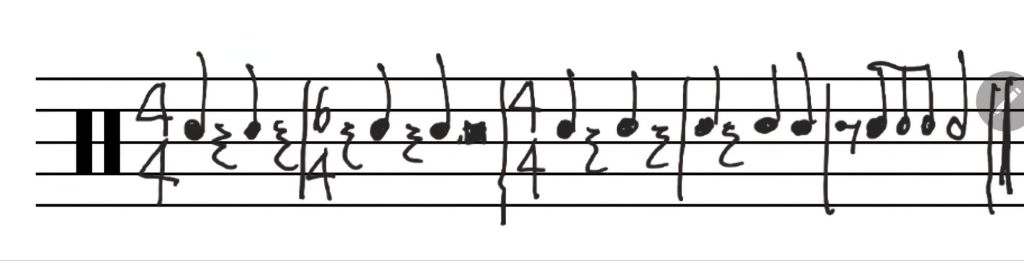
    I’ve taken a lot of inspiration from GIG and Vacation 2.0 specifically. The intro and verse riff is so addictive, woozing between a busy 4/4 and 6/4, and yet we never get a second verse, that section hinted at before the song jumps to a Polvo-esque whispered section. The chorus itself is just so ingenuous, using displaced on-beat hits around the bar to create a stumbling head-banging section.

    The basic chorus hits. The magic is in how so much of this is heavily on the beat, contrasting with the busy and syncopated verse. Excuse the dodgy phone notation.

    One influence which I haven’t seen cited anywhere might be Pie. There are moments on their 1995 album Strictly Seance which I hear echoing in Grass is Green: cross-rhythmic and intensly delivered chord stabs, the discordant picked guitar line in the verse, the melodic delivery which, like Polvo, has something of a throwaway sarcasm to it. Strictly Seance is an essential listen for anyone who likes the angular side of 90s alternative rock.

    Sink This Ship! from Pie’s Strictly Seance. Compare it to one of GIG’s more upbeat tunes.

    Grass is Green recently got back together for a celebration of their debut album, which received a vinyl re-pressing. One can only hope that this might inspire them to try making some new music, life permitting. It does appear that vocalist and guitarist Andy is playing with Devin still in his Maneka project, yet another brilliant Exploding in Sound-affiliated band.

    Three Little Chickens from GIG’s third album Ronson. One of my favourite album openers ever.

    Speedy Ortiz – American Horror

    Speedy Ortiz are still going. They still put out excellent music. Sadie Dupuis is rightly recognised as a major figure of 21st century alternative music, she’s in the Rolling Stone 250 Greatest Guitarists list, she’s a published author. As someone approximately her age, she’s the kind of person you’d be jealous of if her work wasn’t so damn excellent.

    Having said that, and as a major Speedy Ortiz fan at this point, Speedy Ortiz has become somewhat of a Ship of Theseus, with all original band members now replaced aside from Dupuis. I certainly don’t want to assign undue credit… she is clearly the engine room of the band and creative force (there are a couple of early demos of Speedy songs floating around the internet featuring just Dupuis on acoustic guitar, and the entire song is there). But this first iteration of the Speedy Ortiz lineup was something else.

    On their WVAU appearance they performed American Horror, the lead single from their Real Hair EP. It was a strong follow-up to their acclaimed 2013 debut album and contains everything that made that first album great: most of all an ability to work genuinely complex harmony and guitar interplay into accessible alternative rock, thanks to Dupuis’ gift of writing sweet, nimble, catchy melodies over the harshest harmonic terrain. Add to that a rhythm section to die for, both tight and assured but with a feeling that it could all fall apart at any time.

    What pushes this iteration of Speedy towards greatness, however, is the presence of Matt Robidoux on guitar. The circumstances of his exit of from the band seem unpleasant to say the least, with barbs traded in the indie press. The band pressed on with Devin McKnight from Grass is Green on guitar and made the excellent Foil Deer album. But in retrospect the band’s output with Robidoux in the band hit heights you feel they haven’t quite been able to reach without him.

    It’s difficult to capture the essence of what made this group special. Looking back, what really stands out is that they simultaneously have the brilliant songcraft of Dupuis, at once descendant of Malkmus and Timony, and a band that challenges it, improvises around it, risks letting the songs fall apart before elevating them. In the WVAU clip we get a close look at the energy Robidoux brought, like a jazz-school Sonic Youth complete with atonal noise solo. It makes sense that he studied music composition with, among others, Art Ensemble of Chicago’s Roscoe Mitchell. Since leaving Speedy Ortiz he has gone on to have an acclaimed career in contemporary music and performance art. Regardless of the circumstances that led to his departure, it seemed inevitable in one way or another. Yet, during his time in the band, the clash between their style and his art-music inclination produced something truly special.

    We also hear the impact of drummer Mike Falcone despite the fact that he, like the drummers of all three groups, never graces the camera. Falcone served as the longest member of the band besides Dupuis, playing on all the records except Rabbit Rabbit from 2023 and his absence on the recent record is felt. Like all the great drummers he has a distinctive style, both in terms of the tone he gets out of the drums (he often holds the sticks backwards), the parts that he writes and his execution of them live. If I had to define his playing I would say he’s a drummer that gets inside the songs. There is rarely any time-keeping. Instead, he’s busy setting up and catching the chord changes or playing along with a melodic phrase. He has a great Grohl-esque kick drum approach, often using 16th note syncopations in the bass to give the drum parts a ‘whippy’ quality. And he plays f@cking hard, something I saw first hand when I followed his new band Jobber around SXSW for a few of their shows.

    Falcone’s new band Jobber. I think the sign of a great drummer is that you can tell it’s them from essentially beat 1 and that’s certainly the case here.

    These videos were an introduction into a world of excellent, left of centre guitar music and to the label Exploding in Sound records: bands like Kal Marks, Ovlov, Jobber and Mr Goblin have become favourites since. It’s been really enjoyable to track these musicians and their bands, their intertwined projects, and SXSW 2023 was a cool moment where my own musical work briefly passed by theirs. I’m fairly confident that all these musicians would have day jobs and yet they have created and invested in making a substantial body of excellent and uncompromising music. It’s a standard that I have great respect for, one I would love to live up to myself. I know I can. I just have to get these reports done.

  • Listenings #4: Joe Henderson – Our Thing

    It’s hard to overstate the importance and centrality of Joe Henderson to the music put out on Blue Note Records throughout the ’60s. Appearing on close to 30 records through this period, what is remarkable about Henderson’s output is the sheer range of the music he was a part of: From accessible classics like Lee Morgan’s The Sidewinder, Grant Green’s Idle Moments and Horace Silver’s Song For My Father, to experimental, ‘out’ or otherwise progressive records like Andrew Hill’s Point of Departure, McCoy Tyner’s The Real McCoy or Larry Young’s Unity.

    If one looks at Henderson’s discography alone it would seem that he appeared on the scene in ’63 and immediately started making classic, genre-defining records. But of course there is a rich backstory which prepared Henderson for the explosion he would make once he reached NYC: a stint in the US Army where he would tour Europe and cross paths with bebop-meets hard bop pianist Kenny Drew and The Modern Jazz Quartet’s Kenny Clarke. University study during which his classmates included Blue Note labelmate Donald Byrd and legendary pianist and educator Barry Harris. Then, time in the Detroit jazz scene alongside Thad and Elvin Jones, Elvin eventually serving as the drummer on two of Henderson’s most celebrated records (In & Out and Inner Urge).

    Henderson’s earliest recordings, beginning with his career-defining debut Page One, are born of his pairing with trumpeter Kenny Dorham. Dorham, thirteen years Henderson’s senior and a staple of the New York scene since essentially the bebop era, played an early mentorship role for Henderson when he moved to New York. The two would go on to feature on a number of each other’s albums on Blue Note, including Dorham’s classic Una Mas. Together they carved out a particular and immediately identifiable mode of hard bop jazz, at once more accessible and memorable than most through the strength of their compositional writing, individual through their respective improvisational voices and exploratory with the license they afforded their bands. Page One is the album most would cite as representing both Henderson and the genre itself in this period, largely thanks to the tunes Blue Bossa and Recorda Me which have become jazz standards. But three months after Page One was recorded, Henderson and Dorham returned to the studio to record Our Thing, an album which understandably lives in the shadow of its predecessor, but one which perhaps pointed more towards the future of the music as a whole.

    The programme on Our Thing is expectedly varied but gives a window into the sounds floating around the scene at this time. The Henderson-penned Teeter Totter is a burning 12 bar blues, with a quirky ‘backdoor’ turnaround and a melody that brings to mind George Russell pieces like Ezz-Thetic… a kind of cerebral and modal sound. Henderson’s other tune, Our Thing, is a similarly high energy knotty melody with a form that jumps between double time swing and 6/8 time. Much like Page One, Dorham makes a number of important compositional contributions. Pedro’s Time, Back Road and Escapade all feature lovely 2-horn writing, Dorham perhaps having borrowed some of this from his time with Horace Silver. Escapade is an especially interesting tune with a number of surprising melodic and harmonic left turns over a breezy medium swing. It reminded me of Herbie Hancock’s Dolphin Dance from a couple of years later and it makes for a lovely end to the record.

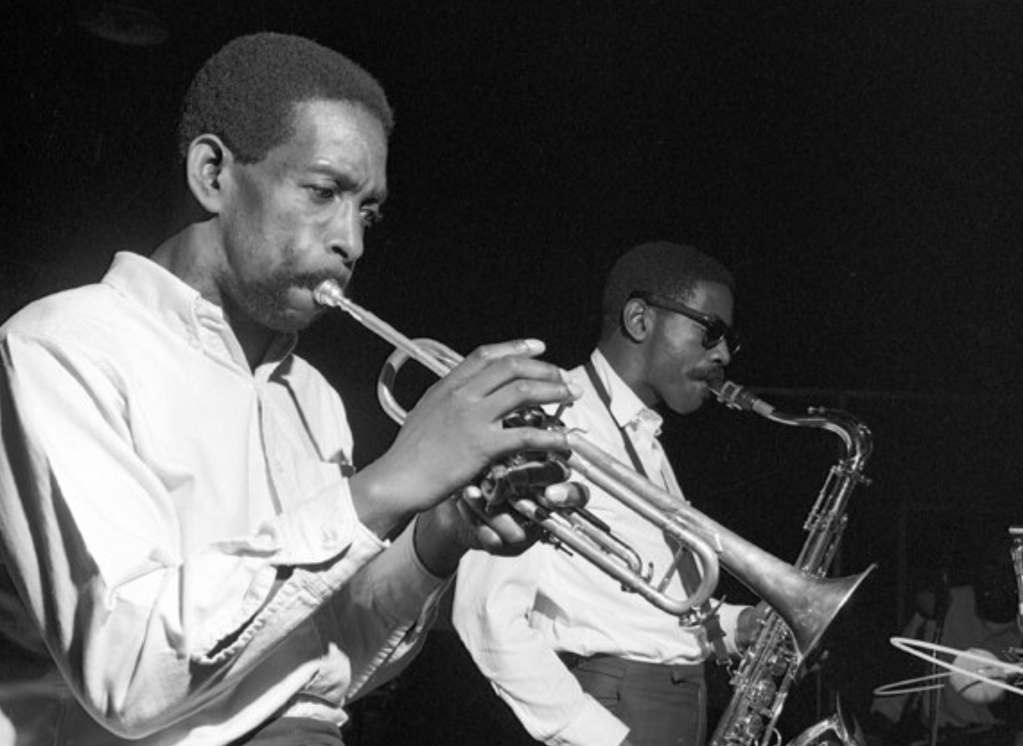
    Dorham and Henderson during the recording of Trompeta Toccata

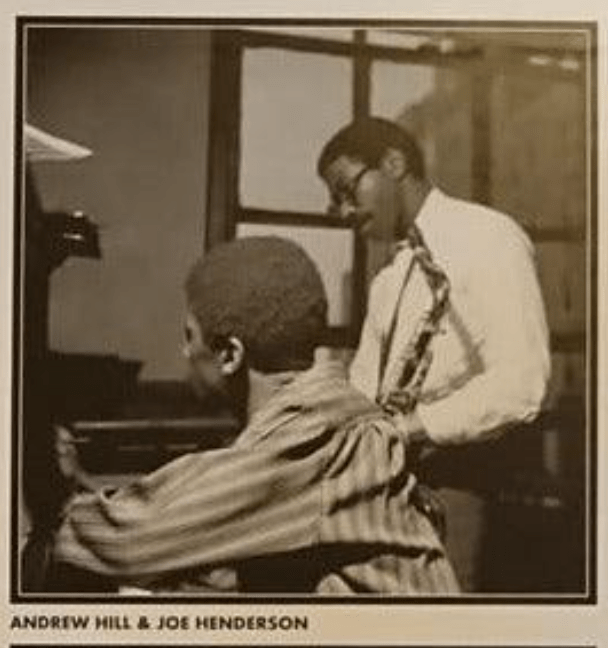
    The most distinctive voice on the record is perhaps pianist Andrew Hill. Jazz piano playing in this period was moving in a number of varied directions, the traces of which are largely evident in the music today. On the one hand, it was becoming formalised and drawing more and more from European classical music thanks to the immense influence of Bill Evans and Herbie Hancock. McCoy Tyner, aside from any specific technical or chord voicing innovations, brought an open and spiritual dimension. Thelonious Monk had already made his immense stylistic mark on the music by the ’60s, though his best selling records were yet to come. Chick Corea and Keith Jarrett were soon to emerge. In a way one can hear pianists grappling with the sound of the ‘new thing’ unleashed upon the world by Ornette Coleman and the question it poses for what the role of the harmonic instrument should be in a style which was unleashing freedom upon the melodic and rhythmic dimensions. Hill’s style can be understood as one potential answer to this question.

    There is a sense in which Hill’s style, in this period especially, is a deconstruction of all that came before. You can hear the history of jazz piano in his sound, but in an almost postmodern sense: he runs ‘bebop-like’ lines but not tied to the harmony in any recognisingly bebop way… he uses percussive clustered chord voicings like Monk but he seems to always be working across the beat rather than deeply embedded in it… he simultaneously catches all the hits and wrinkles of a piece when comping, but his solos are often strangely impressionistic.

    Hill leaves his mark on the record immediately as the first track Teeter Totter begins with a piano solo. It is a brilliant encapsulation of Hill’s playing: cascades of tonal clusters and broken intervals interspersed with knotty 8th note lines with polyrhythmic left hand accompaniment. Hill is often compared to Thelonious, with the common quote being that he was ‘Monk with technique‘ (I’m certain these people haven’t tried to play a Monk transcription note for note). The superficial similarities are there, but perhaps their greatest difference is the mood they bring to any performance they are a part of. There is a cerebrality to Hill and a grave seriousness he seems to bring to the music, where Monk brought joy and humour. Hill steers the music towards darkness, intensity, conviction and the band seems to embrace it and run with it.

    Henderson’s playing is remarkably fully-formed even that this early stage of this career. All his Hendersonisms are firmly in place: the muscular fluency of the faster passages and use of melodic cells and motif development, his use of harmonics and overtones, his perhaps most iconic technique of using of repeated 4, 5 and 6 note groupings in fast flurries. The way he blasts through the title track, with it’s sudden changes from double-time 4/4 to 6/8, points to future players like Michael Brecker and Chris Potter in the way they are able to bend compositional quirks to their will through their sheer force and agility.

    Any discussion of tenor saxophonists in this period inevitably invites comparisons with the towering figures of the time. John Coltrane, of course, looms largest, and by 1963, he and his Classic Quartet had already produced several canonical recordings. Wayne Shorter had yet to join Miles Davis or release his most celebrated solo albums, but his work with Art Blakey already marked him as a major voice. Meanwhile, players like Hank Mobley and Sonny Rollins, sometimes unfairly dismissed as ‘lightweight’ for various reasons, seemed to have receded in perceived relevance by this moment. Joe Henderson occupies a particularly intriguing space in this landscape: his records were more accessible than Coltrane’s, but his playing could be every bit as fearsome as Trane or Shorter’s. Within a year, both Henderson and Shorter would take Coltrane’s rhythm section for a spin, on Inner Urge and JuJu, respectively, creating some of the most impactful jazz of the mid-1960s.

    On Teeter Totter there is a wonderful series of traded fours between Henderson and drummer Pete ‘La Rocha’ Sims. Not only are Sims’ improvisations wonderfully lucid and his time feel immaculate, but Henderson’s contributions demonstrate how his rhythmic sense is as much part of what makes him compelling as much as his melodic one.

    Sims, a little like Joe Chambers, goes under-appreciated compared to the other greats of ’60s jazz drumming. But this record, as well as Henderson’s debut record, are a great showcase of his abilities. He moves with ease between burning swing pieces like Our Thing or Homestretch (from Page One), but particularly thrives on the Latin-infused pieces. This isn’t a surprise given apparently he earned his nickname ‘La Rocha’ from his time playing timbales in Latin bands.

    It’s fun to hear how his playing developed in the period between Our Thing and his appearance on Sonny Rollins’ landmark A Night at the Village Vanguard album from 1957. Sims takes an extended solo on A Night in Tunisia which is full of invention and melody, if perhaps a little loose on occasion. By 1963 his sound has truly settled, he incorporates far more bass drum in his phrases and overall seems to have carved out a unique voice. Elvin Jones, who also features on the Rollins record, follows an even more pronounced trajectory. Compare the Vanguard live record to something like John Coltrane’s Afro Blue Impressions live recordings from ’63 and it sounds like a completely different drummer.

    Eddie Khan is an interesting inclusion on bass. He does not have an extensive discography, in fact he seems to disappear from the scene by 1965, but he contributes a great deal to Our Thing. On the tune Pedro’s Time especially he plays a very interactive role, mixing walking lines with drones and 5th harmonies. Especially during the piano solo he uses the space to play some very adventurous counter-melodic ideas. His style is well suited to the ‘new thing’, particularly his use of pedals which sounds indebted to Charlie Haden. Khan would go on to appear on a number of future-looking records of the time including a personal favourite, Jackie McLean’s One Step Beyond featuring a young Tony Williams.

    Shortly after this recording session Henderson and Hill would reunite on the pianist’s record Black Fire, probably my favourite of Hill’s. Henderson shows again how well his muscular melodic approach is suited to Hill’s angular and difficult compositions and they would work together again on the celebrated Point of Departure.

    Andrew Hill’s Black Fire featuring Henderson. Another fun aspect to this record is to hear Roy Haynes grappling with Hill’s idiosyncratic (in the best way) compositions. The way he managed to keep on top of the rapid changes in the music while also retaining his distinctive sound is amazing to hear.

    Within a year of Our Thing, Dorham and Henderson would go on to record Trompeta Toccata and In & Out, respectively. Though their collaboration was relatively brief in the context of their broader careers, it marked a particularly fruitful period for both artists, yielding a series of vital recordings and enduring standards. Blue Note’s recent release of Forces of Nature, a live session led by Henderson and McCoy Tyner, has prompted a welcome re-evaluation of late-’60s acoustic jazz… a conversation taken up with wonderful insight by Ethan Iverson in his review of the record. I urge anyone reading to return to Our Thing in the same spirit.

  • Listenings #3: Delicatessen – Skin Touching Water

    Delicatessen, the only band currently doing anything interesting with a tune. They are a blast of refreshingly foul breath on a becalmed sea of soporific, retro sludge, a genuinely twisted talent’ reads one review, circa 1995/1996.

    They say of The Velvet Underground that, while they weren’t wildly popular or successful in their day, everyone who heard them started a band. What I can say of Delicatessen’s Skin Touching Water is that while I’ve never met someone who had heard of this album, everyone who hears it and really engages with it comes to love it. Why this band remains so obscure is a genuine mystery, though the quote above offers some suggestions. The band’s unique mix of surrealism, folk, alternative rock and noise was a mile out of step with the prevailing thrust of UK music in the mid-’90s. But you can take my word for it that this album is an absolute gem. You can trust me. Or not, I’m just a liar.

    So much vast machinery…

    On a personal note, this album found me, like many others I consider favourites, thanks to Adelaide guitar maestro and art teacher Tony Burnett (Visitors, Chancery Lane, Mala Lama and more), who slipped me the CD one day when I was probably making my way to the oval for marks-up. I take a strange pride in being one of the oddballs it seemed entirely appropriate to give an album of mid-90s caustic, gothic, Lynchian cowboy grunge, and I can’t thank Tony enough for making that call. He, and whoever was curating the music section at the local library, have probably ended up being the most important musical influences in my life, speaking as an only child (with no siblings to steal records from) living in Australia at the end of history. 

    There’s precious little information about the band Delicatessen or the scene from which they emerged available for a 21st-century internet lurker. On Skin Touching Water at least the band consists of songwriter, vocalist and multi-instrumentalist Neil Carlill accompanied by Craig Bown, Pete Capewell and Stuart Dayman. Carlill’s songs and delivery come across as sinister, surrealist reports from the far side, the rhythm section like an otherworldly lounge band. The obvious comparison is to Nick Cave’s work around this period, and the music shares a similar outsider’s take on gothic Americana. But while Cave relied more heavily on direct use of folk, blues and country music forms and stylings, Delicatessen weaves that sound into something genuinely unique: the abrasiveness and loud-quiet-loud dynamics of ’90s alternative rock at one moment, angular acoustic guitar and bossa nova-inspired brushes grooves the next. The production is extremely effective, largely raw and unprocessed except for select moments, such as on the single C.F. Kane, where the entire mix is washed with ear-splitting distortion. It’s a totally unique production approach which untilises little in the way of the tropes of the period.

    C.F. Kane, part surrealist ballad, part noise rock.

    What we can say, and the quote at the beginning of this post aludes to this, is that the album came about during the height of Britpop, and it seems that the band was received somewhat as a reaction to or holdout against that particular movement.

    I’m actually quite fond of Britpop music, given that I really engaged with it years after its moment had passed. As a result I listen to it on its own terms rather than as the musical wing of the Cool Britania moment which saw the arrival of New Labour, giddily optimistic postmodern nationalism and a hedonistic popular culture. I take these criticisms and I often find myself making similar ones of my own generation’s music. Nonetheless, I like the tunes.

    It is worth, however, considering Delicatessen in this context. There’s no ‘godlike’ anthems (aside from perhaps the chorus of Classic Adventure), jovial sing-alongs or ironic posturing. There’s a dead-eyed seriousness to Skin Touching Water, a sinister swagger.

    I’m Just Alive, the opening track of the album. There was a minor trend of opening albums with songs built around loops, Pure Morning by Placebo is another that comes to mind from a couple of years later.

    The album’s first three tracks are both incredibly strong and a real encapsulation of the sonic world on Skin Touching Water. I’m Just Alive is a mesmerising adventure in guitar layering, underpinned by a glorious distorted organ loop. Carlill offers a number of surrealist profundities which stick in your brain, in this case ‘I’m just alive, I’m just alive, I’m just a life, she seems to understand‘. (I’m taking a guess at lyrics as they are nowhere to be found online and quite cryptically written inside the album cover)

    I can imagine that the album’s second track, C.F. Kane, would be many people’s favourite. A slithering blues-adjacent acoustic guitar riff begins the song, followed by more surrealist horror from Carlill (bloody cheeks, cut their lips off, slice their kids up, the pain shoots up my sleeve or has my arm another wrist?). This makes way for a relatively melodic chorus, with the lyrics referencing Citizen Kane over a relatively cheerful IV to I chord progression. The moment which really elevates the song comes after the second chorus where, seemingly out of nowhere, the song explodes into some of the most caustic, squealing distortion you can imagine. Carlill’s almost cartoon-villain ‘all I see is energyyyyyyy’, which precedes this moment, is humorously chilling. As far as songwriting goes it’s a shockingly bold left turn.

    My personal favourite is the third track Zebra/Monkey/Liar. Lyrically it seems to reference predator/prey dynamics using the ‘laws of the jungle’ as a metaphorical vehicle. The song is essentially through-composed, with four distinct sections following each other with no repetitions. The climax of the piece is the final ‘movement’, a return to the distortion of C.F. Kane, but this time with Carlill doing his best Jim Morrison croon. Personally, I hold this song up as the gold standard of non-conventional songwriting, both because of how effective of a journey the song is, but also because it’s done in less than 3 mins 30 seconds.

    Zebra/Monkey/Liar – to me the best moment on the record

    Other highlights on the album include You Cut My Throat, I’ll Cut Yours, which juxtaposes driving intense verses with subdued choruses featuring slide guitar and the album’s final track If She Was Anybody Else, which is another fascinatingly off-kilter song featuring a wonderfully weird string hook and some really bold harmonic moves. I’ve often wondered if the song was partially assembled from samples, so surprising is some of the shifting harmonies. Looking back, song anticipates the sound of bands like Deerhunter by over a decade.

    I recently found a copy in a used bin at a local record store. It felt like finding the Holy Grail. For a moment I was returned to those afternoons with my friends trawling used sections and the local library for hidden gems, letting happenstance be the curator of our music tastes. We have streaming and personalised playlists now, and yet Delicatessen remain obscure. If the All Seeing Algorithm is going to insist on consuming and curating everything, the least it could do is give Skin Touching Water a second life. It’s a remarkable record.

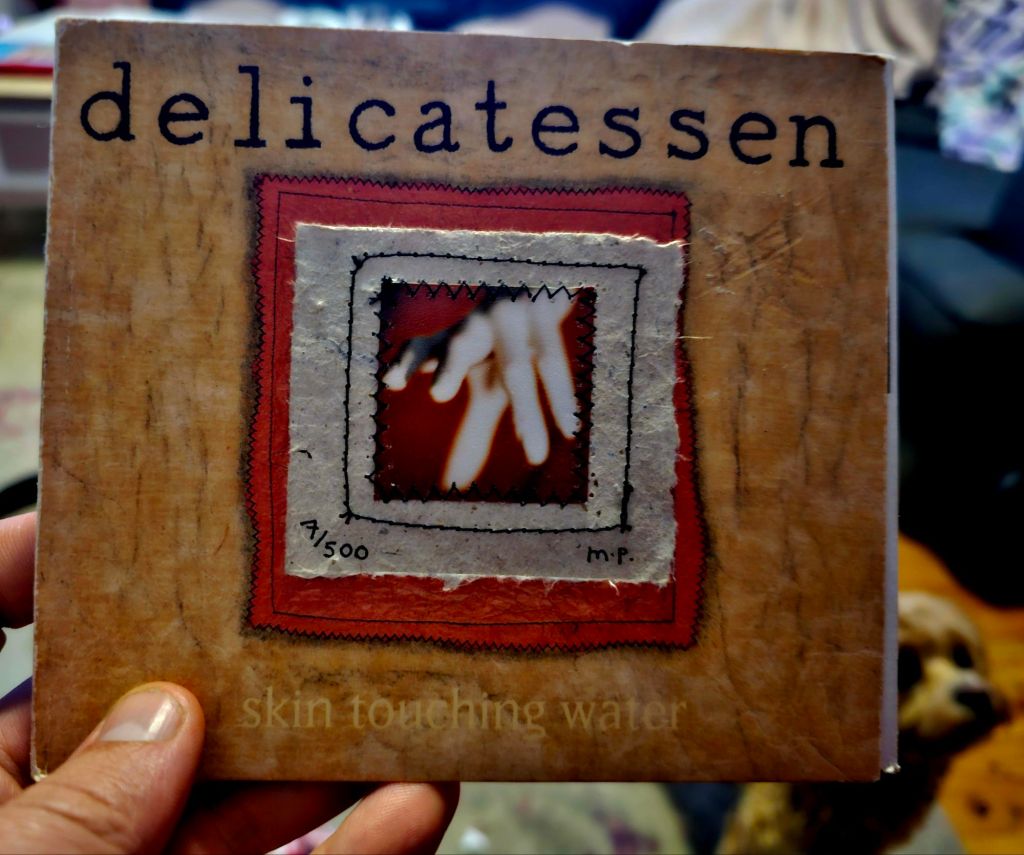
    My treasured copy, which appears to be number 7 of 500. I had forgotten that the layered artwork was actually stitched into the cardboard.
  • Listenings #2: 50 Foot Wave – Golden Ocean

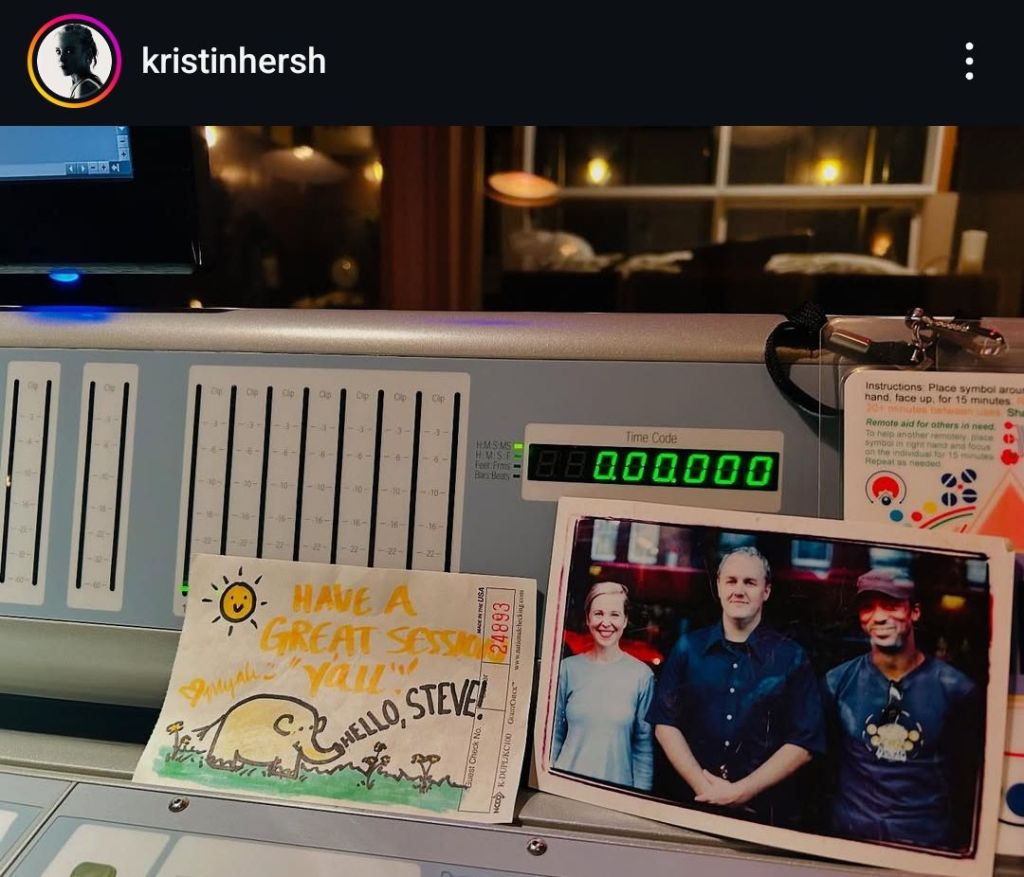
    50 Foot Wave: Kristin Hersh, Rob Ahlers and Bernard Georges. Photographer unknown.

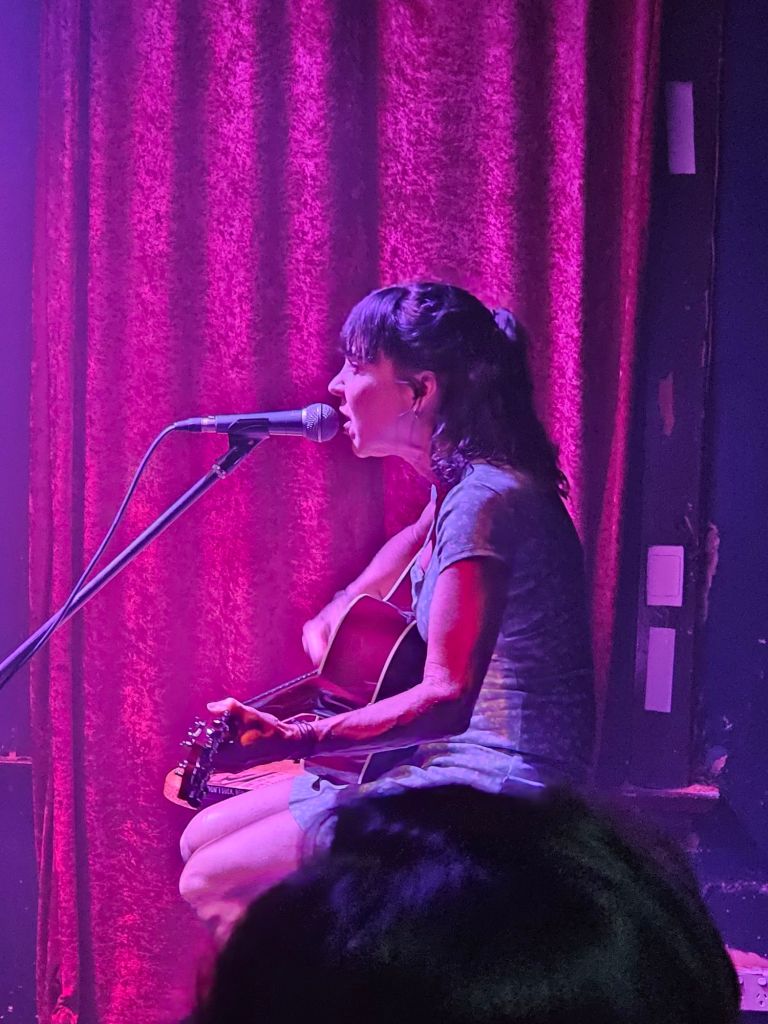
    This year, on a sweaty March evening at the Grace Emily Hotel, I went to see Kristin Hersh. She was touring her 2023 solo album Clear Pond Road and reading excerpts from her Vic Chesnutt memoir ‘Don’t Suck, Don’t Die’ as well as her contribution to the FUTURES series ‘The Future of Songwriting’. By happy coincidence, this was the day before the release of the latest Throwing Muses record ‘Moonlight Concessions’, and she had brought some ‘very illegal’ advanced copies of the vinyl along with her (mine was already in the mail). It wasn’t an especially prolific moment for an artist with near thirty albums and five books… if you’re able to catch one of her shows you’re as likely as I was to find yourself in a nexus of releases.

    My vantage point at the Grace Emily

    Hersh might be best known as the primary songwriter and creative force behind Throwing Muses, the band which, among many things, brought the weird and eerie to the 4AD sound. I’m convinced that they are one strategically placed song in Fight Club away from selling out theatres, they’re that important in the trajectory of ’80s college rock.

    Counting Backwards from The Real Ramona. Probably their most popular release, I think there’s a strong argument that it’s their best. Although it lacks Leslie Langston’s inventive bass which is a huge part of their early sound, it contains some of Hersh’s best writing and Tanya Donelly also contributes two alt-pop gems in Not Too Soon and Honeychain, a style that would morph into her own band Belly.

    Alternately she might be known under her own name, where she has released twelve solo albums spanning dark acoustic chamber folk, alternative rock, Appalachian songs and more. While certainly not an artist who can be pigeon-holed, her song ‘Your Ghost’ featuring Michael Stipe was an underground hit, and on the four occasions I’ve managed to see her perform solo she has ended her set with that number.

    Your Ghost from Hips and Makers featuring Michael Stipe of REM. It’s hard to imagine today but this brooding acoustic ballad cracked the top 50 of the 1994 Hottest 100, one position after Weezer’s Sweater Song

    It’s less likely that she would be known for 50 Foot Wave, the hard rock power trio. The Fire Records website describes them as ‘Kristin Hersh’s other band’ and their music as ‘grunge melancholy and dronecore menace’. I think that’s fair, particularly in reference to their 2022 record Black Pearl.

    Golden Ocean catches the band in an earlier mode. There’s a lot of grunge, but not much in the way of melancholy. There’s brutal riffing. There’s an abundance of time signature changes. There’s honestly some of the best and least clichéd hard rock drumming this side of Jimmy Chamberlain.

    Clara Bow. Probably the most accessible song on the album, it nonetheless retains a lot of the elements that define early 50 Foot Wave: Hersh’s vocal snarl, huge grunge chords, angular lead lines and relentless drive from the Georges and Ahlers

    Zooming out, you can hear this record coming when you listen to the self-titled Throwing Muses record from 2003. The sudden time signature and groove changes, Hersh’s developing vocal snarl, a grunge-inflected power and barre chord approach on guitars. Earlier Muses music often involved interlocking picked and arpeggiated guitar lines from Hersh and Donelly, reminiscent of the jangle of 80s indie music. On the 2003 record we start to hear an angularity to the guitar parts and boldness to the arrangements. Earlier (and more recent) Hersh music could be meditative and textural but in 2003 things were becoming more jagged.

    Call Me from the 1986 self titled Throwing Muses album. All the early elements are there: intertwined guitars and vocals, virtuosic bass from Leslie Langston, bold songwriting twists and turns
    Pretty or Not from the Throwing Muses 2003 self titled album. The sudden changes of feel remain, but the guitars are heavier and harmonically solid. In retrospect you can hear the 50 Foot Wave sound emerging.

    Vocally, Hersh is a powerhouse on Golden Ocean. In her early career her voice had an agility but also when required a captivating frailty. This makes way for what can only be described as a roar, part Rid of Me-era PJ Harvey, part Black Francis or Kurt Cobain. Check out Pneuma from 2:30 mins onwards… I’ve probably irritated my throat more than once trying to sing along.

    Pneuma from Golden Ocean

    While I want to give credit to long-time Muses and 50 Foot Wave bassist Bernard Georges, always solid with a great tone, the other major force on this record is drummer Rob Ahlers. I believe, though I can’t find the reference, that Ahlers came at the recommendation of Muses drummer Dave Narcizo after he was unable to be involved in the project. Narcizo is a strong contributor in his own right, navigating and supporting Hersh’s twisty compositions in an accessible way, and with his own distinctive style. (His prominent use of China cymbal in an indie/alternate setting is notable, particularly when otherwise he is quite sparing with crash cymbals).

    Ahlers is a monster on this album. The pure velocity and belting tone of Jimmy Chamberlain with the inventiveness and pocket of someone like Rob Ellis (another PJ Harvey reference… there’s more to come). Where Narcizo would write a drum part to give the audience as much of a solid foothold around Hersh’s songwriting wrinkles as possible, Ahlers highlights them and doubles down on them. The result is, at times, something akin to math-rock, where the expected groove is always being subverted. But unlike those bands, there’s also a maturity to the drum parts. The multitudinous fills all serve a purpose. It draws out playfulness and bombast in Hersh’s writing… you get the sense she was enjoying being handed the keys to this particular high-performance vehicle.

    This early incarnation of 50 Foot Wave feels like Hersh is taking her cue from PJ Harvey’s first two records, Dry and Rid of Me. On the surface there’s a small lyrical reference… ‘gonna wash that man right out of my hair’ from Bone China recalls the same repeated line from Harvey’s Sheela-Na-Gig.

    Shela-Na-Gig featuring Rob Ellis on drums. While he plays this one fairly straight down the line, he still incorporates a number of fills ‘across the bar’, landing on beat 2, which has since become a go-to move for rock drummers

    Beyond this, Hersh also uses some of the polyrhytmic ideas Harvey was making the basis of a number of her early songs. Much like Ahlers, Rob Ellis wrote drum parts which sometimes juxtaposed Harvey’s songs, underpinning them often with variations of quarter-note triplets creating a seductive push and pull feel. While I can understand PJ eventually wanting a support band that just played the songs as expected, and she got that on To Bring You My Love, it’s those first two records that are really captivating for me in no small part due to Ellis’s contributions.

    Elsewhere there are some fairly classic half-time/double-time punk rock moves, but it is done so effortlessly and naturally that these don’t feel at all like imported rock clichés. Ginger Park is a great example and a real showcase of Ahlers ability to grab a song by the scruff of the neck.

    Ginger Park, a sub-3 minute burn through time feel changes and ingenious riffing

    The production from Ethan Allen is fantastic. Fairly liberal with the compression, it nonetheless gives each instrument wiggle room whilst remaining near the red most of the way. The drums are close to my ideal recorded drum sound, in no small part because Ahlers’s tone is just so good. Some people just know how to hit a snare drum. The guitars are big and buttery. It’s just a great mix for a power trio. Interestingly, Allen had previously produced other Hersh works including the somewhat more relaxed affair Sky Motel.

    Echo from Sky Motel. Interesting to note that it includes a little of the wah-wah pedal lead guitar that Hersh would use again on 50 Foot Wave songs like Petal. The first example I can recall though is actually on the Throwing Muses song Bright Yellow Gun from their 1995 record University.

    50 Foot Wave would put out one more album in this style, the 2009 record Power + Light, before becoming a little cleaner and a little more ‘math-oriented’ on the With Love From The Men’s Room and Bath White EPs. After a 6 year gap they would return with Black Pearl in 2022 which indeed is awash with ‘dronecore menace’ as the blurb suggests, the twists and turns of their earlier work smoothed out and replaced with sinister atmosphere. Yet I feel that Golden Ocean holds up as 50 Foot Wave’s definitive statement and a forgotten gem of 2005. As Pitchfork said, when they used to be occasionally interesting, ‘… one of Hersh’s former labelmates posited that motherhood equaled mental freeze. No doubt said labelmate never envisioned Kristin Hersh, mother of four, entering her 21st year as a professional musician, leading a group that runs laps around most rock bands.’*

    Kristin Hersh recently uploaded an Instagram post of what looks like a mixing console with a print of the photo at the top of this post. Exciting things could be on their way.

    Hmm

    *wow, there was a time when popular writers could expect the audience to catch a reference

  • Listenings #1: Lee Morgan – Tom Cat

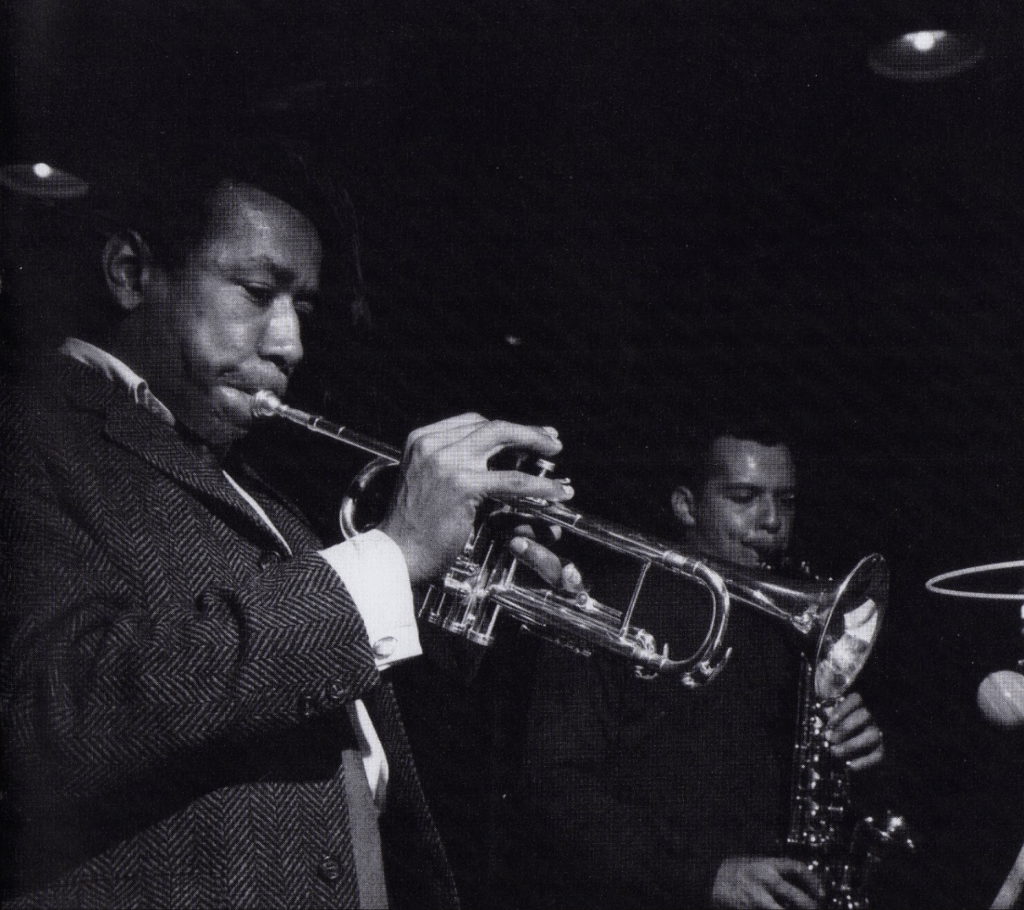
    Lee Morgan and Jackie McLean

    Something I’m intending to do with this blog is write a little about albums or tunes I’ve come to love over the years, with a particular focus on music which might have slipped through the cracks or fallen off the radar.

    ‘Tom Cat’ by Lee Morgan is one such album. The story regarding the sequencing of releases of Morgan’s albums has been told elsewhere, but I’ll summarise here. By the time this album was recorded in August 1964, Morgan had become a significant commodity as far as the Blue Note record label was concerned thanks to the success of his album The Sidewinder and the use of its title track in a Chrysler commercial in 1963. A fact that’s difficult to grapple with today is that the tune The Sidewinder cracked the Billboard Top 100, a tune which is undeniably catchy and joyous, but also features some pretty exploratory improvisation from Morgan and Joe Henderson especially, at least by the standards of ‘mainstream’ music charts.

    The title track ‘Tom Cat’, featuring Morgan and Jackie McLean in particular sounding wonderful over the iconic Blakey shuffle

    The result of this success is that albums such as Tom Cat and the celebrated Search For The New Land were shelved. In the case of New Land the delay was only from 1964 until 1966, but in the case of Tom Cat the album remained unreleased until 1980, eight years after his death. For this reason alone I can understand why Tom Cat isn’t often regarded as an important marker in the progression of 1960s jazz, but these kinds of conversations about the historical importance of an album, whether the music within represents a progression for the artists or something novel… these things don’t matter so much for me.

    Taken from Morgan’s ‘Search For The New Land’, another album with a delayed release, in favour of chasing a follow-up to The Sidewinder

    Onto the actual music… the first thing to note is that the lineup is a kind of alternate reality Jazz Messengers with a front line of Morgan, Jackie McLean and Curtis Fuller, with McCoy Tyner, Bob Cranshaw and Art Blakey in the rhythm section. This invites some comparisons to Blakey’s ’60s groups, in particular what I consider the two classic Jazz Messengers lineups: the Morgan, Wayne Shorter, Bobby Timmons, Jymie Merritt group who made albums such as The Freedom Rider and A Night in Tunisia, and the group featuring Freddie Hubbard, Curtis Fuller, Shorter, Merritt or Reggie Workman and Cedar Walton on piano who made the classic Free For All among a number of classics. The group Morgan assembled for Tom Cat was a who’s who of Jazz Messengers alumni, including Jackie McLean who appears on a few mid-’50s Messengers albums. The one exception, and a major figure in the Tom Cat ensemble is pianist McCoy Tyner. Two things to note here: Firstly, Tyner and Messengers member Cedar Walton in the ’60s were not an universe away from each other in terms of style. I find their hard-bop inside/outside approaches quite similar at points. Secondly, Tyner did appear with Blakey on the latter’s A Jazz Message (not an official Messengers release), along with Sonny Stitt… a great record! I personally find Blakey, Tyner and Walton have deeply authoritative and assured time feels, and the dialogue they have at that level is always thrilling for me.

    Blakey’s ‘spin off’ album from 1963 featuring Tyner and Sonny Stitt

    Lee Morgan was, of course, part of Jazz Messengers lineups which featured composers with styles which pointed in quite different directions regarding the trajectory of jazz in the 1960s. Benny Golson and Bobby Timmons (who wrote Moanin’, perhaps the tune most identified with the Jazz Messengers), brought a distinctively gospel-infused sound to their writing, particularly on their most well known tunes. On the other hand Wayne Shorter, who Morgan played alongside in both the Jazz Messengers and on Shorter’s own albums (including his debut record as well as Night Dreamer, arguably Shorter’s best), was perhaps the composer who most defines the ‘mid-’60s sound’, with his blending of iconic melody writing and harmonic innovations. On Tom Cat, Morgan was at the helm of a Jazz Messengers-like ensemble and we get to hear his own compositional voice in this context.

    The result is something probably closer to Timmons and Golson, but there is an undeniable influence of Shorter in the mix. The blues was never far from Morgan at any point of his career and it is certainly present in his writing here: the tune Tom Cat itself broadly follows a blues form, while Twice Around is essentially a contrafact of Nat Adderley’s ‘Work Song’.

    Yet there are a few traces of the modal harmony that Morgan would have been exposed to playing Shorter’s compositions with Blakey’s band, in addition to his experience playing on John Coltrane’s ‘Blue Train’, the title track of which uses the same technique Morgan uses on Tom Cat: using the form and chord changes of the blues, but harmonising the horns in that distinctively modal way using scale tone triads.

    These techniques, combined with what was becoming Morgan’s distinctive melodic sensibility, make pieces like Tom Cat and Rigormortis really memorable and effective.

    Twice Around featuring some very clever writing from Morgan, with the melody played twice, first as a triplet-heavy shuffle, second as a double-time swing
    To toot my own horn briefly, a playalong track of the same piece which I made for some students to introduce Morgan’s music and give them some blues vocabulary at faster tempos. Not a masterpiece by any stretch but hopefully not bad for beginners. Can you make GarageBand swing? You decide.

    Jackie McLean plays with notable clarity on this recording. One thing I admire about his playing is the completeness of his phrases; ideas emerge fully formed and structured yet without the dispassion that at times crept into someone like Sonny Rollins’ more motivic solos. There’s a certain way that McLean’s clarity of thought is a great support role for Morgan and his more exploratory moments, much like Herbie Hancock does on other Morgan records (Hancock the Sideman was a master in this period of building a solo from the smallest cell of an idea and carrying it through all its permutations and potentialities. See live recordings of the Miles Davis Second Great Quintet from 1965 to 1967… sometimes the music disintegrates before Hancock puts the pieces back together again).

    Milestones live from the Plugged Nickel 1965. Note how the music falls apart after Shorter’s solo, which Herbie rebuilds using small motivic cells.

    McCoy Tyner at this period is more known for his work with John Coltrane’s Classic Quartet, where he was painting with huge brush stokes of quartal harmony and colour. On Tom Cat he seemingly returns to his style from a couple of years before, such as on albums like Reaching Fourth… the pentatonic runs and stomping left hand 5ths are there, but there are lots of blues and bebop-like passages also. Yet it’s worth noting that in the same year as Tom Cat, Tyner recorded his Duke Ellington tribute record and was appearing on Joe Henderson and Shorter albums. It’s important to remember that even though Tyner’s ’60s style, broadly defined, has been digested so thoroughly by subsequent piano players that a mention of his name calls up a specific system of chord voicings and scales, he was in fact a versatile player who could adapt to the setting he found himself in.

    Art Blakey’s role is an interesting one on Tom Cat. I recall Richard Cook and Brian Morton writing in their Penguin Guide to Jazz that Blakey showed a unique ability to understand and accompany Thelonious Monk’s music. He plays a similar role here on Tom Cat, bringing all his iconic fills and press rolls, but always being ‘in’ the music, be it the feel and time changes of Twice Around or the double-time moments of Tyner’s Twilight Mist. It’s fun to hear Morgan and Blakey trading solos, with Blakey deploying many of his iconic lines, knowing Morgan has probably traded fours with these exact drum phrases before.

    Monk and Blakey together.

    Considering it with all of the aformentioned context Tom Cat feels like a document of ‘high hard-bop’, one of the brightest moments of a jazz style which blended complex multi-part writing of the kind we hear on Oliver Nelson’s Blues and the Abstract Truth, while retaining and emphasising memorable melodies and danceable rhythms. Within a few years the music was venturing into more ‘free’ terrain or going electric in the form of jazz fusion. For this reason it’s understandable that an album like this in 1980 would have seemed unremarkable. But as I’ve hopefully described, Tom Cat is a wonderful collection of great writing, tackled by some of the true greats of the music.