referent

Category: Uncategorized

  • Listenings #2: 50 Foot Wave – Golden Ocean

    50 Foot Wave: Kristin Hersh, Rob Ahlers and Bernard Georges. Photographer unknown.

    This year, on a sweaty March evening at the Grace Emily Hotel, I went to see Kristin Hersh. She was touring her 2023 solo album Clear Pond Road and reading excerpts from her Vic Chesnutt memoir ‘Don’t Suck, Don’t Die’ as well as her contribution to the FUTURES series ‘The Future of Songwriting’. By happy coincidence, this was the day before the release of the latest Throwing Muses record ‘Moonlight Concessions’, and she had brought some ‘very illegal’ advanced copies of the vinyl along with her (mine was already in the mail). It wasn’t an especially prolific moment for an artist with near thirty albums and five books… if you’re able to catch one of her shows you’re as likely as I was to find yourself in a nexus of releases.
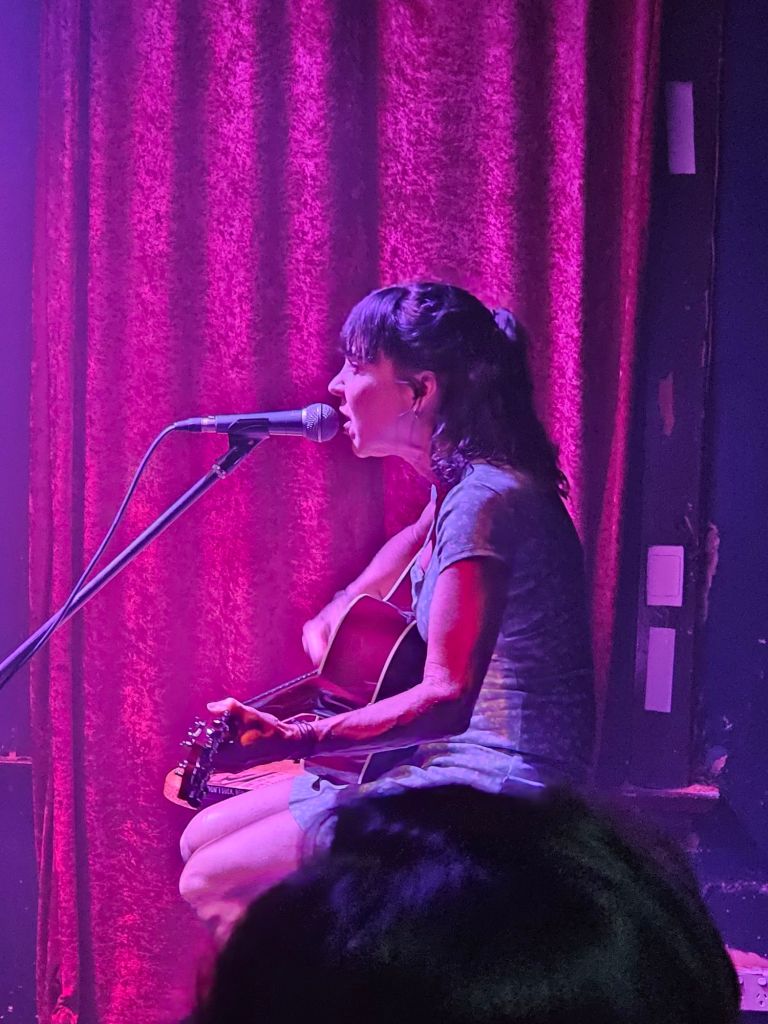
    My vantage point at the Grace Emily

    Hersh might be best known as the primary songwriter and creative force behind Throwing Muses, the band which, among many things, brought the weird and eerie to the 4AD sound. I’m convinced that they are one strategically placed song in Fight Club away from selling out theatres, they’re that important in the trajectory of ’80s college rock.

    Counting Backwards from The Real Ramona. Probably their most popular release, I think there’s a strong argument that it’s their best. Although it lacks Leslie Langston’s inventive bass which is a huge part of their early sound, it contains some of Hersh’s best writing and Tanya Donelly also contributes two alt-pop gems in Not Too Soon and Honeychain, a style that would morph into her own band Belly.

    Alternately she might be known under her own name, where she has released twelve solo albums spanning dark acoustic chamber folk, alternative rock, Appalachian songs and more. While certainly not an artist who can be pigeon-holed, her song ‘Your Ghost’ featuring Michael Stipe was an underground hit, and on the four occasions I’ve managed to see her perform solo she has ended her set with that number.

    Your Ghost from Hips and Makers featuring Michael Stipe of REM. It’s hard to imagine today but this brooding acoustic ballad cracked the top 50 of the 1994 Hottest 100, one position after Weezer’s Sweater Song

    It’s less likely that she would be known for 50 Foot Wave, the hard rock power trio. The Fire Records website describes them as ‘Kristin Hersh’s other band’ and their music as ‘grunge melancholy and dronecore menace’. I think that’s fair, particularly in reference to their 2022 record Black Pearl.

    Golden Ocean catches the band in an earlier mode. There’s a lot of grunge, but not much in the way of melancholy. There’s brutal riffing. There’s an abundance of time signature changes. There’s honestly some of the best and least clichéd hard rock drumming this side of Jimmy Chamberlain.

    Clara Bow. Probably the most accessible song on the album, it nonetheless retains a lot of the elements that define early 50 Foot Wave: Hersh’s vocal snarl, huge grunge chords, angular lead lines and relentless drive from the Georges and Ahlers

    Zooming out, you can hear this record coming when you listen to the self-titled Throwing Muses record from 2003. The sudden time signature and groove changes, Hersh’s developing vocal snarl, a grunge-inflected power and barre chord approach on guitars. Earlier Muses music often involved interlocking picked and arpeggiated guitar lines from Hersh and Donelly, reminiscent of the jangle of 80s indie music. On the 2003 record we start to hear an angularity to the guitar parts and boldness to the arrangements. Earlier (and more recent) Hersh music could be meditative and textural but in 2003 things were becoming more jagged.

    Call Me from the 1986 self titled Throwing Muses album. All the early elements are there: intertwined guitars and vocals, virtuosic bass from Leslie Langston, bold songwriting twists and turns
    Pretty or Not from the Throwing Muses 2003 self titled album. The sudden changes of feel remain, but the guitars are heavier and harmonically solid. In retrospect you can hear the 50 Foot Wave sound emerging.

    Vocally, Hersh is a powerhouse on Golden Ocean. In her early career her voice had an agility but also when required a captivating frailty. This makes way for what can only be described as a roar, part Rid of Me-era PJ Harvey, part Black Francis or Kurt Cobain. Check out Pneuma from 2:30 mins onwards… I’ve probably irritated my throat more than once trying to sing along.

    Pneuma from Golden Ocean

    While I want to give credit to long-time Muses and 50 Foot Wave bassist Bernard Georges, always solid with a great tone, the other major force on this record is drummer Rob Ahlers. I believe, though I can’t find the reference, that Ahlers came at the recommendation of Muses drummer Dave Narcizo after he was unable to be involved in the project. Narcizo is a strong contributor in his own right, navigating and supporting Hersh’s twisty compositions in an accessible way, and with his own distinctive style. (His prominent use of China cymbal in an indie/alternate setting is notable, particularly when otherwise he is quite sparing with crash cymbals).

    Ahlers is a monster on this album. The pure velocity and belting tone of Jimmy Chamberlain with the inventiveness and pocket of someone like Rob Ellis (another PJ Harvey reference… there’s more to come). Where Narcizo would write a drum part to give the audience as much of a solid foothold around Hersh’s songwriting wrinkles as possible, Ahlers highlights them and doubles down on them. The result is, at times, something akin to math-rock, where the expected groove is always being subverted. But unlike those bands, there’s also a maturity to the drum parts. The multitudinous fills all serve a purpose. It draws out playfulness and bombast in Hersh’s writing… you get the sense she was enjoying being handed the keys to this particular high-performance vehicle.

    This early incarnation of 50 Foot Wave feels like Hersh is taking her cue from PJ Harvey’s first two records, Dry and Rid of Me. On the surface there’s a small lyrical reference… ‘gonna wash that man right out of my hair’ from Bone China recalls the same repeated line from Harvey’s Sheela-Na-Gig.

    Shela-Na-Gig featuring Rob Ellis on drums. While he plays this one fairly straight down the line, he still incorporates a number of fills ‘across the bar’, landing on beat 2, which has since become a go-to move for rock drummers

    Beyond this, Hersh also uses some of the polyrhytmic ideas Harvey was making the basis of a number of her early songs. Much like Ahlers, Rob Ellis wrote drum parts which sometimes juxtaposed Harvey’s songs, underpinning them often with variations of quarter-note triplets creating a seductive push and pull feel. While I can understand PJ eventually wanting a support band that just played the songs as expected, and she got that on To Bring You My Love, it’s those first two records that are really captivating for me in no small part due to Ellis’s contributions.

    Elsewhere there are some fairly classic half-time/double-time punk rock moves, but it is done so effortlessly and naturally that these don’t feel at all like imported rock clichés. Ginger Park is a great example and a real showcase of Ahlers ability to grab a song by the scruff of the neck.

    Ginger Park, a sub-3 minute burn through time feel changes and ingenious riffing

    The production from Ethan Allen is fantastic. Fairly liberal with the compression, it nonetheless gives each instrument wiggle room whilst remaining near the red most of the way. The drums are close to my ideal recorded drum sound, in no small part because Ahlers’s tone is just so good. Some people just know how to hit a snare drum. The guitars are big and buttery. It’s just a great mix for a power trio. Interestingly, Allen had previously produced other Hersh works including the somewhat more relaxed affair Sky Motel.

    Echo from Sky Motel. Interesting to note that it includes a little of the wah-wah pedal lead guitar that Hersh would use again on 50 Foot Wave songs like Petal. The first example I can recall though is actually on the Throwing Muses song Bright Yellow Gun from their 1995 record University.

    50 Foot Wave would put out one more album in this style, the 2009 record Power + Light, before becoming a little cleaner and a little more ‘math-oriented’ on the With Love From The Men’s Room and Bath White EPs. After a 6 year gap they would return with Black Pearl in 2022 which indeed is awash with ‘dronecore menace’ as the blurb suggests, the twists and turns of their earlier work smoothed out and replaced with sinister atmosphere. Yet I feel that Golden Ocean holds up as 50 Foot Wave’s definitive statement and a forgotten gem of 2005. As Pitchfork said, when they used to be occasionally interesting, ‘… one of Hersh’s former labelmates posited that motherhood equaled mental freeze. No doubt said labelmate never envisioned Kristin Hersh, mother of four, entering her 21st year as a professional musician, leading a group that runs laps around most rock bands.’*

    Kristin Hersh recently uploaded an Instagram post of what looks like a mixing console with a print of the photo at the top of this post. Exciting things could be on their way.
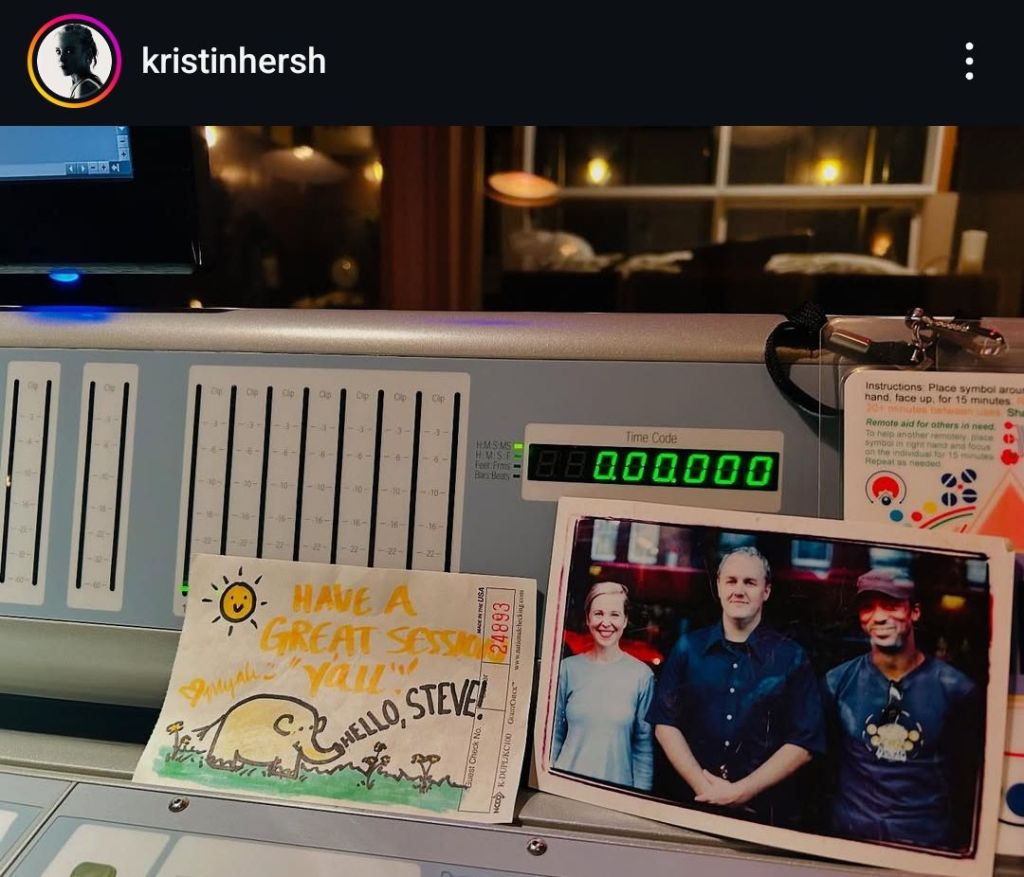
    Hmm

    *wow, there was a time when popular writers could expect the audience to catch a reference
  • Listenings #1: Lee Morgan – Tom Cat

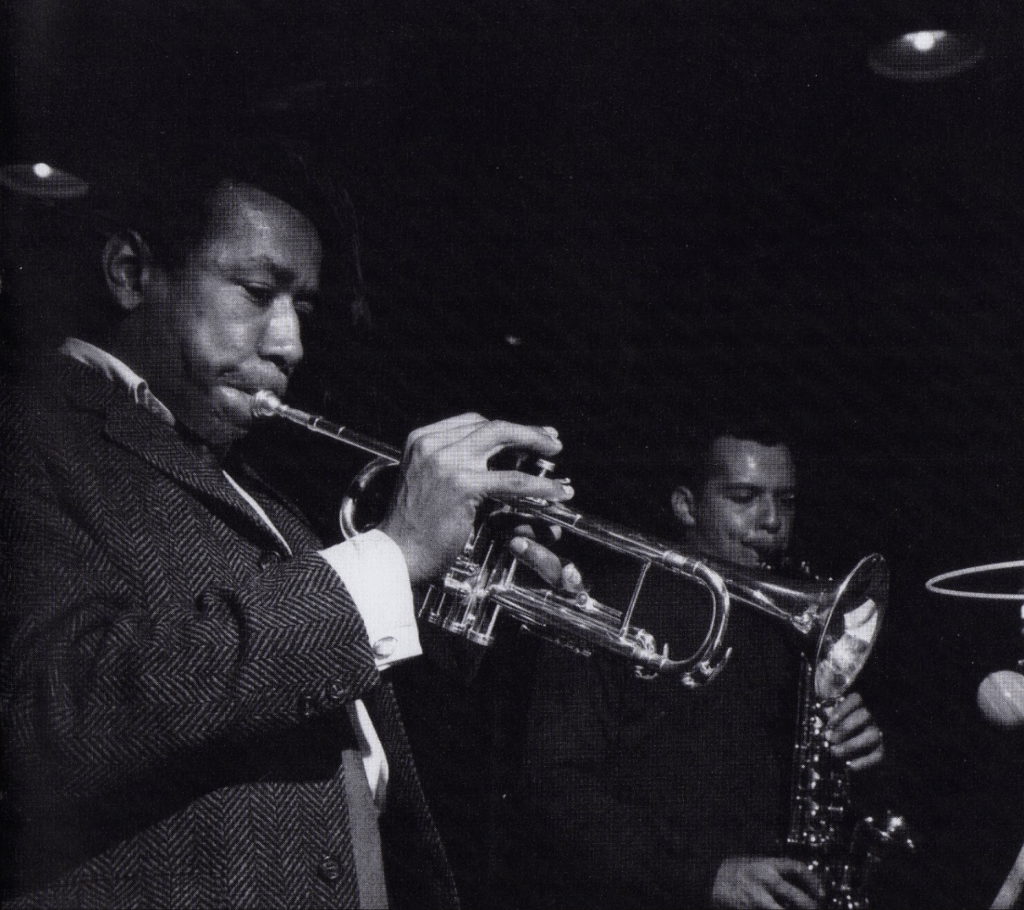
    Lee Morgan and Jackie McLean

    Something I’m intending to do with this blog is write a little about albums or tunes I’ve come to love over the years, with a particular focus on music which might have slipped through the cracks or fallen off the radar.

    ‘Tom Cat’ by Lee Morgan is one such album. The story regarding the sequencing of releases of Morgan’s albums has been told elsewhere, but I’ll summarise here. By the time this album was recorded in August 1964, Morgan had become a significant commodity as far as the Blue Note record label was concerned thanks to the success of his album The Sidewinder and the use of its title track in a Chrysler commercial in 1963. A fact that’s difficult to grapple with today is that the tune The Sidewinder cracked the Billboard Top 100, a tune which is undeniably catchy and joyous, but also features some pretty exploratory improvisation from Morgan and Joe Henderson especially, at least by the standards of ‘mainstream’ music charts.

    The title track ‘Tom Cat’, featuring Morgan and Jackie McLean in particular sounding wonderful over the iconic Blakey shuffle

    The result of this success is that albums such as Tom Cat and the celebrated Search For The New Land were shelved. In the case of New Land the delay was only from 1964 until 1966, but in the case of Tom Cat the album remained unreleased until 1980, eight years after his death. For this reason alone I can understand why Tom Cat isn’t often regarded as an important marker in the progression of 1960s jazz, but these kinds of conversations about the historical importance of an album, whether the music within represents a progression for the artists or something novel… these things don’t matter so much for me.

    Taken from Morgan’s ‘Search For The New Land’, another album with a delayed release, in favour of chasing a follow-up to The Sidewinder

    Onto the actual music… the first thing to note is that the lineup is a kind of alternate reality Jazz Messengers with a front line of Morgan, Jackie McLean and Curtis Fuller, with McCoy Tyner, Bob Cranshaw and Art Blakey in the rhythm section. This invites some comparisons to Blakey’s ’60s groups, in particular what I consider the two classic Jazz Messengers lineups: the Morgan, Wayne Shorter, Bobby Timmons, Jymie Merritt group who made albums such as The Freedom Rider and A Night in Tunisia, and the group featuring Freddie Hubbard, Curtis Fuller, Shorter, Merritt or Reggie Workman and Cedar Walton on piano who made the classic Free For All among a number of classics. The group Morgan assembled for Tom Cat was a who’s who of Jazz Messengers alumni, including Jackie McLean who appears on a few mid-’50s Messengers albums. The one exception, and a major figure in the Tom Cat ensemble is pianist McCoy Tyner. Two things to note here: Firstly, Tyner and Messengers member Cedar Walton in the ’60s were not an universe away from each other in terms of style. I find their hard-bop inside/outside approaches quite similar at points. Secondly, Tyner did appear with Blakey on the latter’s A Jazz Message (not an official Messengers release), along with Sonny Stitt… a great record! I personally find Blakey, Tyner and Walton have deeply authoritative and assured time feels, and the dialogue they have at that level is always thrilling for me.

    Blakey’s ‘spin off’ album from 1963 featuring Tyner and Sonny Stitt

    Lee Morgan was, of course, part of Jazz Messengers lineups which featured composers with styles which pointed in quite different directions regarding the trajectory of jazz in the 1960s. Benny Golson and Bobby Timmons (who wrote Moanin’, perhaps the tune most identified with the Jazz Messengers), brought a distinctively gospel-infused sound to their writing, particularly on their most well known tunes. On the other hand Wayne Shorter, who Morgan played alongside in both the Jazz Messengers and on Shorter’s own albums (including his debut record as well as Night Dreamer, arguably Shorter’s best), was perhaps the composer who most defines the ‘mid-’60s sound’, with his blending of iconic melody writing and harmonic innovations. On Tom Cat, Morgan was at the helm of a Jazz Messengers-like ensemble and we get to hear his own compositional voice in this context.

    The result is something probably closer to Timmons and Golson, but there is an undeniable influence of Shorter in the mix. The blues was never far from Morgan at any point of his career and it is certainly present in his writing here: the tune Tom Cat itself broadly follows a blues form, while Twice Around is essentially a contrafact of Nat Adderley’s ‘Work Song’.

    Yet there are a few traces of the modal harmony that Morgan would have been exposed to playing Shorter’s compositions with Blakey’s band, in addition to his experience playing on John Coltrane’s ‘Blue Train’, the title track of which uses the same technique Morgan uses on Tom Cat: using the form and chord changes of the blues, but harmonising the horns in that distinctively modal way using scale tone triads.

    These techniques, combined with what was becoming Morgan’s distinctive melodic sensibility, make pieces like Tom Cat and Rigormortis really memorable and effective.

    Twice Around featuring some very clever writing from Morgan, with the melody played twice, first as a triplet-heavy shuffle, second as a double-time swing
    To toot my own horn briefly, a playalong track of the same piece which I made for some students to introduce Morgan’s music and give them some blues vocabulary at faster tempos. Not a masterpiece by any stretch but hopefully not bad for beginners. Can you make GarageBand swing? You decide.

    Jackie McLean plays with notable clarity on this recording. One thing I admire about his playing is the completeness of his phrases; ideas emerge fully formed and structured yet without the dispassion that at times crept into someone like Sonny Rollins’ more motivic solos. There’s a certain way that McLean’s clarity of thought is a great support role for Morgan and his more exploratory moments, much like Herbie Hancock does on other Morgan records (Hancock the Sideman was a master in this period of building a solo from the smallest cell of an idea and carrying it through all its permutations and potentialities. See live recordings of the Miles Davis Second Great Quintet from 1965 to 1967… sometimes the music disintegrates before Hancock puts the pieces back together again).

    Milestones live from the Plugged Nickel 1965. Note how the music falls apart after Shorter’s solo, which Herbie rebuilds using small motivic cells.

    McCoy Tyner at this period is more known for his work with John Coltrane’s Classic Quartet, where he was painting with huge brush stokes of quartal harmony and colour. On Tom Cat he seemingly returns to his style from a couple of years before, such as on albums like Reaching Fourth… the pentatonic runs and stomping left hand 5ths are there, but there are lots of blues and bebop-like passages also. Yet it’s worth noting that in the same year as Tom Cat, Tyner recorded his Duke Ellington tribute record and was appearing on Joe Henderson and Shorter albums. It’s important to remember that even though Tyner’s ’60s style, broadly defined, has been digested so thoroughly by subsequent piano players that a mention of his name calls up a specific system of chord voicings and scales, he was in fact a versatile player who could adapt to the setting he found himself in.

    Art Blakey’s role is an interesting one on Tom Cat. I recall Richard Cook and Brian Morton writing in their Penguin Guide to Jazz that Blakey showed a unique ability to understand and accompany Thelonious Monk’s music. He plays a similar role here on Tom Cat, bringing all his iconic fills and press rolls, but always being ‘in’ the music, be it the feel and time changes of Twice Around or the double-time moments of Tyner’s Twilight Mist. It’s fun to hear Morgan and Blakey trading solos, with Blakey deploying many of his iconic lines, knowing Morgan has probably traded fours with these exact drum phrases before.

    Monk and Blakey together.

    Considering it with all of the aformentioned context Tom Cat feels like a document of ‘high hard-bop’, one of the brightest moments of a jazz style which blended complex multi-part writing of the kind we hear on Oliver Nelson’s Blues and the Abstract Truth, while retaining and emphasising memorable melodies and danceable rhythms. Within a few years the music was venturing into more ‘free’ terrain or going electric in the form of jazz fusion. For this reason it’s understandable that an album like this in 1980 would have seemed unremarkable. But as I’ve hopefully described, Tom Cat is a wonderful collection of great writing, tackled by some of the true greats of the music.

  • The Man Himself – Raspberry Ripple

    Continuing my updates of releases I’ve been involved in, here’s a new tune from The Man Himself which I had the pleasure of adding some drums to.

    Ghyti/Mr Himself has been my favourite Adelaide band for quite some time, ever since our bands played together. I think it’s the combination of adventurous yet economical songwriting, the legacy of UK pop/rock/indie present in his work which he manages to build upon and a great live set which won me over. I’ve been lucky enough to make friends and collaborate with band members over recent years and was really excited and flattered to be asked to play on some recent The Man Himself recordings including his 2023 album All Day Breakfast.

    https://themanhimselfmusic.bandcamp.com/album/all-day-breakfast

    Raspberry Ripple came out maybe a month ago and it was a really nice experience hearing it as I recorded the drums quite some time ago and my memory from that period is quite hazy. What I do remember is that we hadn’t played it much live or in rehearsal, so I was contemplating a number of approaches I could take in the session. In the end I went for somewhat of a Ringo-inflected mambo beat and I really like how it came out in the end. I had some fun at a recent gig incorporating a shaker part while keeping the mambo in the left hand and feet.

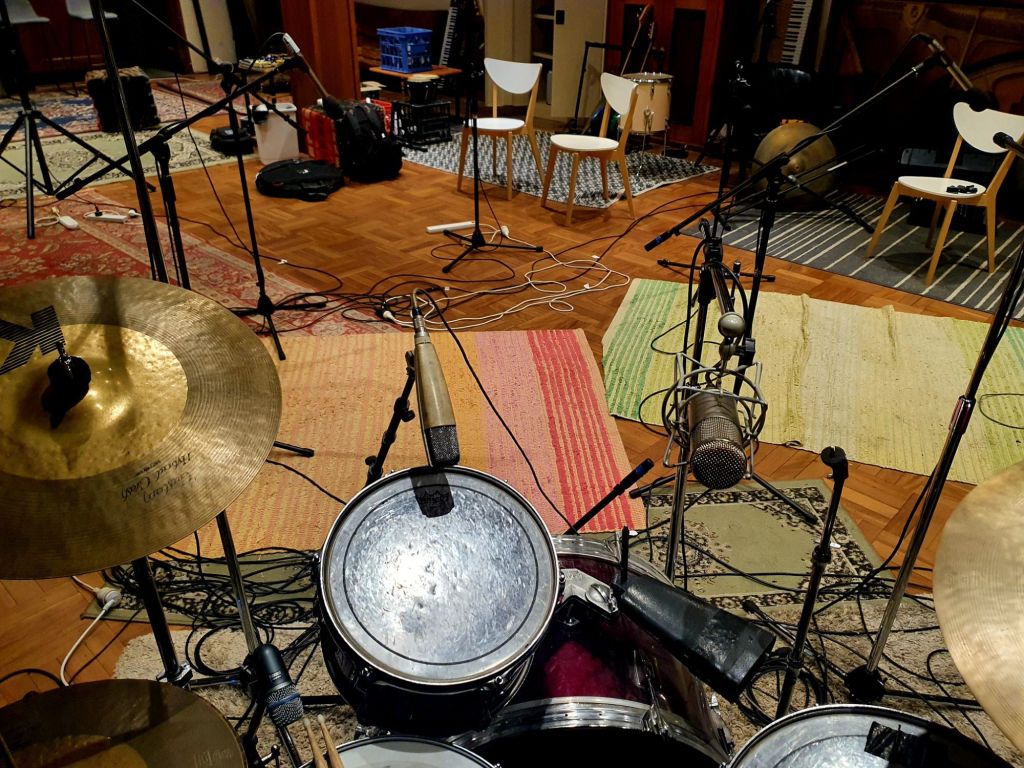
    The recording was made at the sadly closed Electric Ant Studio in a wonderful old basement bar room. I had a lot of great experiences jamming in that space in probably the 2020-2023 period.

    The recording set-up at Electric Ant Studio
  • Dean Forever – Greatest Once single, maybe more??

    I’ll start with a bit of what I’ve been writing and recording in the last couple of years.

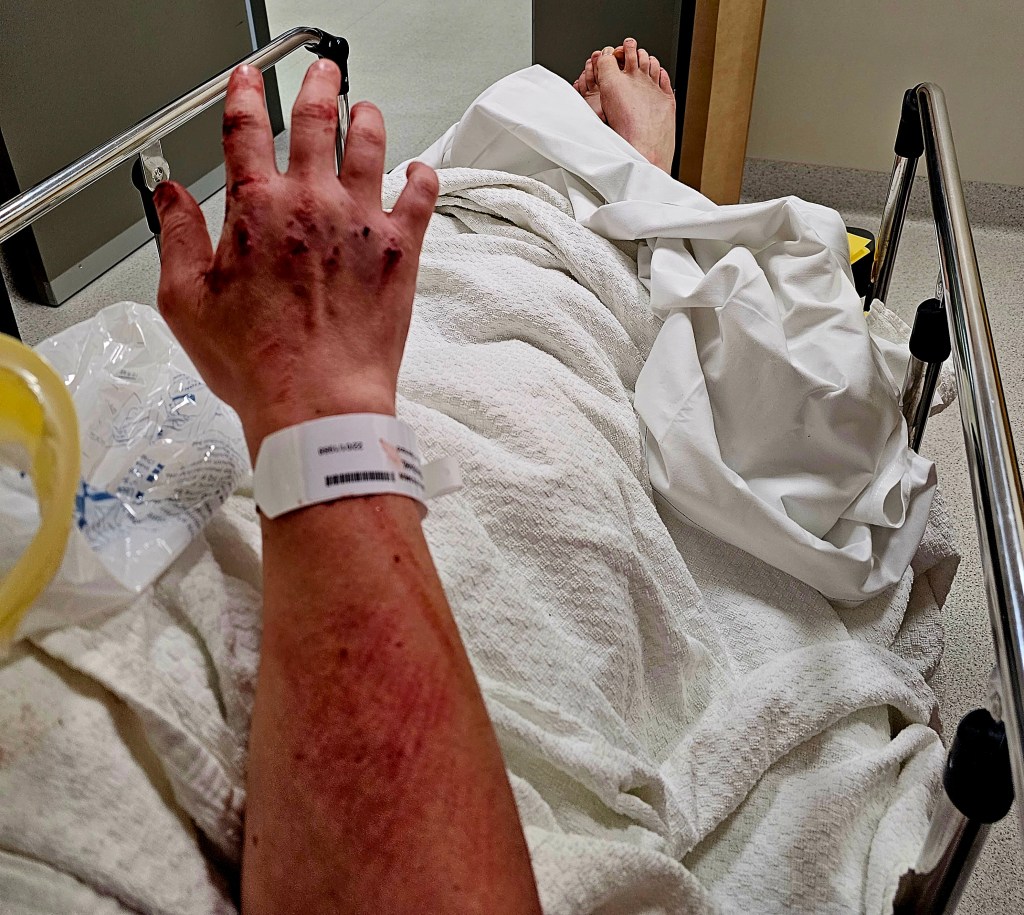
    For some context, the original music side of my life had hit a bit of a speed-bump in the last 18 months or so. I had quite a bad cycling accident (see gory photo) which put a real hold on things. Shattered teeth, broken arm, bruised brain etc. So I figure I might start this blog thing with a drip feeding of the work and projects I have managed to get involved in, in the recent past.

    DEAN FOREVER is an original music project where I’ve been songwriting and doing the multi-instrumentalist thing. Just prior to my accident we did a lot of recording and turned out the tune below, ‘Greatest Once‘.

    From my perspective, I was trying to evoke a little of the indulgent and maximalist parts of mid to late-1990s pop/rock/art-pop. There’s clear references to the Shoegaze sound in there, but also the way a band like Curve would blend electronic and proto-Trip Hop aspects into that world. Production-wise it was a very ‘yes, and… ‘ approach, always looking to add more. A reference here is Oasis and their oft criticised third album Be Here Now, which is rightly identified as the product of a band with unlimited resources but little discipline. Another reference, although I can’t hear it now, was Spaceman by Babylon Zoo, a wonderfully absurd and somewhat awkward epic that nonetheless probably anticipated some of the guitar and production sounds of the early 2000s and has a chorus that runs through my head on many occasions.

    There are a few albums of that period which capture a similar mood… ‘Machina’ by The Smashing Pumpkins comes to mind, or even some moments from The Sebadoh… the sort of awkward collision of the always-in-the-red loudness war and the idea that one escape route from the hedonism and counterculture-made-mainstream of the mid-’90s was to double down. Push the mix so hard the music became a cloud. Find an even bigger chorus. Replace Loud-Quiet-Loud with Loud-Loud-Loud. The end result at times was a return to the impressionism of the Shoegaze sound these bands made nods to but ultimately attempted to leave behind.

    Well, as someone too young to have really understood that music at the time, I actually really enjoy this sound despite the protests of my Elder Millennial and Gen X friends. We know in retrospect that these bands lost momentum, evolved into other projects or made way for copycat acts who dialled up the sentimentality in anticipation for the coming personal-as-profound and/or nostalgia-drenched music that dominated the early part of the next century. Nonetheless, I think there was something interesting that they were trying to do, so that became a bit of a reference point in my mind for this session.

    How’s that for a way of excusing an overcrowded arrangement on my part?

    We recorded a lot more in this session, so hopefully more music will be coming soon on the DF front.

  • what, when, why… how?

    this is a surely doomed attempt to escape the terminal pull of the algorithm and web 3.0 or whatever they’re calling it. Hopefully I can capture some of the magic of the blog era/early social media and potentially enjoy the internet again.

    I’m a musician, teacher, and generally a big fan of arts and culture, so this is where I’ll be sharing what I’m up to.

    Also I don’t know how to work this website, so consider this the test post. Wish me luck.

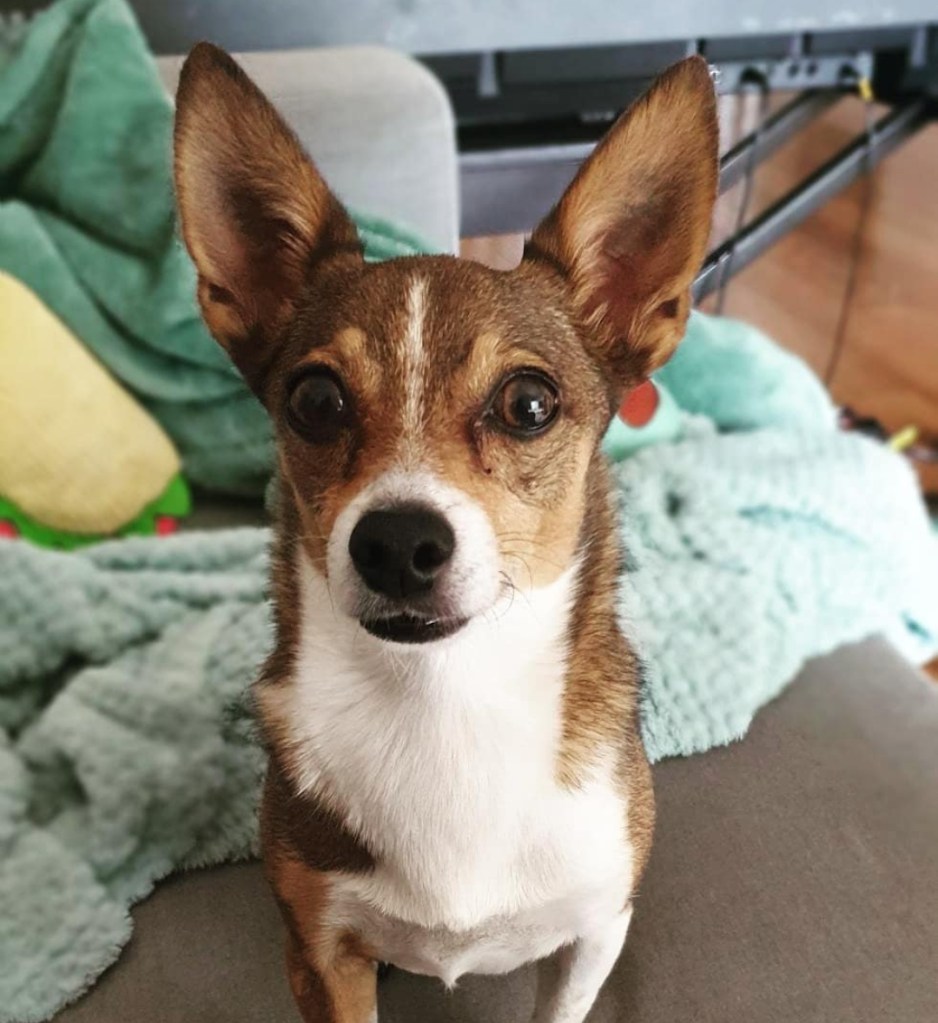
    meet Gambit by the way