referent

Tag: reviews

  • Listenings #6: John Frusciante – Inside of Emptiness


    For better or worse, John Frusciante always follows his muse. It led him to join… and then leave… the Red Hot Chili Peppers twice, both times at the height of their superstardom. It led him to follow up the immense mainstream success of the Grammy-winning Blood Sugar Sex Magik with two raw, almost caustic solo records in the ’90s. More recently, it’s taken him deep into challenging hip hop and breakcore-adjacent territory, allegedly going nearly a decade without seriously picking up a guitar. And around 2004–05, it led him to record and release six albums in rapid succession, probably his best work to date, bringing together a set of influences and obsessions he was likely finding hard to express within the Chili Peppers: Bowie/Reed-inspired rock, electronica, Krautrock, garage.

    In 2002 the Chili Peppers released By The Way. For non-fans this album probably represents another collection of funky rock songs about girls, California, universal love, girls and California. And yes, it is that. But to less cynical ears By The Way is distinctive in the Chili Peppers catalogue, marking a turn towards greater songwriting depth and sophistication thanks to Frusciante’s outweighed contribution. The album is awash in his Brian Wilson-inspired vocal harmonies. The chord progressions are rich. The tracks are often thickly layered in guitar effects. ‘Writing By The Way has been one of the happiest times of my life‘ he was quoted as saying upon its release. (The feeling wasn’t entirely mutual, Flea saying later he was on the verge of quitting the band due to feeling sidelined by Frusciante’s torrent of creativity during the writing and recording sessions).

    From Frusciante’s 1994 double-album Niandra LaDes and Unsually Just a T-Shirt. A collection of his lo-fi home recordings featuring raspy falsetto, reversed guitars, tape manipulation. One can’t help draw comparisons with Syd Barrett’s post-Pink Floyd solo work.

    Frusciante’s lyrics through this period, in fact beginning with his excellent 2001 effort To Record Only Water For Ten Days, are preoccupied with ideas of being, death, nothingness, rebirth. It is hard to not receive this in the context of his career trajectory, having returned to his most famous band after a number of years in substance abuse-induced exile.

    His first musical statement upon his return was the extremely successful Californication. Listening back to it in the context of what was to come shortly after (By The Way and the string of solo records) you can hear Frusciante grappling with his somewhat reduced facility on the guitar, opting for simplicity and immediacy on Californication and tonal texture via effects pedals and layering on By The Way. To his great credit he turned a somewhat diminished virtuosity into some of the most iconic riffs and guitar solos of the period… I would think, for example, many non-fans could hum his three Scar Tissue guitar solos note-for-note.

    This Is The Place from By The Way, a great example of Frusciante’s vocal layering, guitar effects and melodic writing.

    By the time it came to 2004 Frusciante had regained his facility on the guitar, now with a suite of effects pedals at his disposal, but he had also found his voice. Beginning with Shadows Collide With People, in many ways a continuation of By The Way, and carrying on to The Will To Death, Inside of Emptiness, A Sphere In The Heart of Silence, Curtains, DC EP and Automatic Writing, he embarked on a remarkably lucid, accessible, assured yet still adventurous period of songwriting defined perhaps most of all by the strength of his vocal performances. It seems that he indeed felt reborn, as his lyrics suggested, and was invigorated by these newly honed or rediscovered skills.
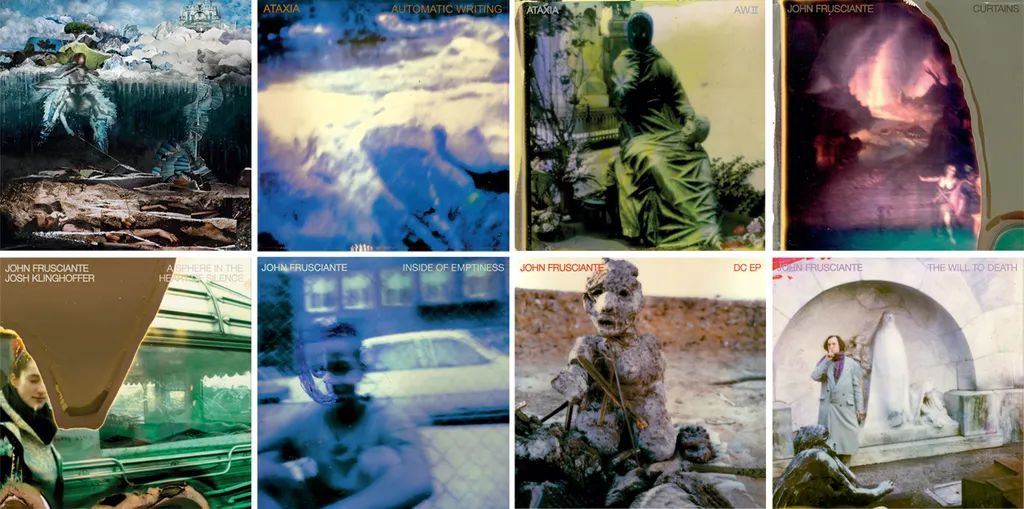
    Just some of the albums or EPs Frusciante put out between 2004-2009

    Inside of Emptiness might be the most straightforward rock album of the batch. While each album contains a great number of strong songs and memorable moments, it is the nature of such a prolific output that there are some songs which are more impactful than others. Inside of Emptiness, however, feels compelling from start to finish, in part perhaps because it has a unity of focus.

    The album begins with What I Saw, which along with songs like The World’s Edge and Emptiness seem like Frusciante’s take on grunge and ’90s alt rock, genres which ran concurrently with his time as a funk rocker. After expressing a distaste for Nirvana particularly in early interviews, Frusciante has since cited Cobain as among his favourite artists. What I Saw especially contains a couple of particularly Nirvana-esque moments, particularly the pre-chorus, but never slips into imitation, especially towards the end where Frusciante gives us one of his signature guitar solos.

    Anyone familiar with the Chili Peppers’ live performances during this period, especially the iconic Slane Castle show, would recognise the What I Saw solo as following a similar approach to the one he was using with the Peppers. Frusciante tends to avoid extended, linear melodies, preferring motifs or energetic ‘guitarisms’, often repeating them four times before moving on. Even when he departs from this pattern, his solos are built around motif development, with ideas rarely discarded unless they’ve been fully mined for all their content, energy, or emotion. This gives his solos a ‘hooky’ quality, as opposed to being purely exploratory or self-indulgent. This approach makes perfect sense in a live context, where Frusciante was the sole guitarist, and with no comping behind him, repetitive, rhythmic, and catchy phrases could carry the song on their own.

    Songs like Interior Two, A Firm Kick, and I’m Around evoke mid-’60s pop, with The Beatles and The Beach Boys as clear touchstones, but there’s also a hint of ’50s doo-wop. The Velvet Underground also left their mark in two ways: first, in the breezy songwriting style of tracks like Interior Two, which recalls the later VU albums, and second, in the album’s production, which strongly echoes the raw, garage-rock feel of their masterpiece White Light/White Heat.

    The album’s centrepiece is Look On, a mid-tempo track that could easily feel like an anthem if not for Josh Klinghoffer’s disjointed, counter-punching drum part (more on his role later). Similar to By The Way’s Don’t Forget Me, it’s one of those slow burners that builds to an almost one-and-a-half-minute guitar solo… arguably one of his best on record. Here, Frusciante steps away from his usual motif development approach, opting instead for a J Mascis-like onslaught of pentatonic melodies and bends. As far as rock solos go it’s a perfect example of how energy, intent, and spirit can elevate even a simple tonal palette into something impactful.

    Josh Klinghoffer plays a significant role on the majority of Frusciante’s albums through this period, to the point that the album A Sphere In The Heart of Silence is co-credited to him. Although he is now best known for his decade-long stint as a Chili Peppers’ guitarist himself, replacing Frusciante post-Stadium Arcadium, he is an accomplished musician and collaborator outside of this context. In particular he served as primary guitarist and part-time drummer for PJ Harvey during her Uh Huh Her tour, which was a great live period for PJ.

    A Perfect Day Elise live featuring Klinghoffer on drums and Simon ‘Ding’ Archer of The Fall, Black Francis’ live band and more.

    Klinghoffer, though best known as a guitarist, takes on the role of drummer across this series of albums and does so brilliantly. His playing has the sensitivity of a songwriter, someone who really inhabits the songs, but there’s also a restless creativity in his approach to the kit. He rarely plays a straight beat, constantly breaking things up with open hi-hat stabs and off-kilter fills. One of the real joys of the album is listening to how his drumming locks in with… and sometimes pushes against… Frusciante’s guitar rhythms. Personally, I’ve found the drumming on Inside of Emptiness deeply influential; it’s a rare mix of groove, invention, and just enough disruption to keep things interesting.

    It’s interesting to contrast Inside of Emptiness, The Will to Death or DC EP, where Klinghoffer is on drums, with Shadows Collide With People, which features Chad Smith. Smith is, of course, excellent… certainly among the pantheon of great rock drummers… but compared to Klinghoffer, he tends to make safer, more expected musical choices. The result is that Shadows feels somewhat middle-of-the-road… the songs are immaculately played, the production is polished, and Frusciante reportedly laboured over every detail… yet it still comes off somewhat weaker than the albums which followed soon after.

    A Firm Kick. A relatively conventional song in the ’60s songwriting mould… listen to how Klinghoffer is able to both maintain the solid backbeat while also colouring the music with hi-hat interjections, snare rolls and fills.

    The production on Inside is very minimalistic, reminiscent of the late ’60s to ’70s. What sets it apart is particularly the drum production, which is distorted and dynamic. It reminded me a little of Sleater-Kinney’s The Woods, and in much the same way as it did with Janet Weiss it made Klinghoffer’s drum parts all the more dynamic and exciting.

    Sleater-Kinney’s Entertain. I can imagine Dave Fridmann’s production to be nightmare fuel for many producers… but I love his work here and especially on Number Girl’s album Num-Heavymetallic. The best thing to come out of the Loudness War.

    Vocally, this album captures Frusciante at his peak. By this point, he had a full spectrum of vocal modes at his disposal—soaring falsetto both in lead passages (as on the haunting Scratches) and in layered backing harmonies, alongside his ‘signature’ mid-range vibrato, most memorable on Otherside, the standout from Californication. By 2004, he’d also added a grunge-inspired rasp to his repertoire… a marked shift from the frayed, bleating voice heard on his earliest solo records.

    The album closer Scratches

    The Red Hot Chili, and by extension Frusciante himself, occupy an odd position for music snob-types (of which I am a card carrying member), perhaps best embodied by an often cited Nick Cave quote, ‘I’m forever near a stereo saying, “What the f##k is this garbage?” And the answer is always the Red Hot Chili Peppers.‘ A little like The Smashing Pumpkins, their combination of a lack of subtlety and an aversion to ’90s style Malkmusian irony make them one of the first artists a budding hipster places in their cordon sanitaire.


    Yet what the success of the Chili Peppers allowed Frusciante was the freedom to experiment and follow his muse. Whether it was the psychedelic synthpop of To Record Only Water for Ten Days, the folk rock of Curtains, or the ’60s/’70s-inspired rawness of The Will to Death and Inside of Emptiness, the music he made during this period is both consistently strong and entirely out of step with the trends of its time. It captures a child of Hendrix, Bowie, Iggy… even Elton… rediscovering his love for playing and recording with a vitality not seen since Mother’s Milk in the late ’80s. The musical wanderlust might read as naïve to some… but it was enabled by the unusual privilege of success, allowing him to make records without any real concern for marketability or whether the results came across as too earnest. These albums, and Inside of Emptiness especially, remain rewarding listens even twenty years on.
  • Listenings #4: Joe Henderson – Our Thing

    It’s hard to overstate the importance and centrality of Joe Henderson to the music put out on Blue Note Records throughout the ’60s. Appearing on close to 30 records through this period, what is remarkable about Henderson’s output is the sheer range of the music he was a part of: From accessible classics like Lee Morgan’s The Sidewinder, Grant Green’s Idle Moments and Horace Silver’s Song For My Father, to experimental, ‘out’ or otherwise progressive records like Andrew Hill’s Point of Departure, McCoy Tyner’s The Real McCoy or Larry Young’s Unity.

    If one looks at Henderson’s discography alone it would seem that he appeared on the scene in ’63 and immediately started making classic, genre-defining records. But of course there is a rich backstory which prepared Henderson for the explosion he would make once he reached NYC: a stint in the US Army where he would tour Europe and cross paths with bebop-meets hard bop pianist Kenny Drew and The Modern Jazz Quartet’s Kenny Clarke. University study during which his classmates included Blue Note labelmate Donald Byrd and legendary pianist and educator Barry Harris. Then, time in the Detroit jazz scene alongside Thad and Elvin Jones, Elvin eventually serving as the drummer on two of Henderson’s most celebrated records (In & Out and Inner Urge).

    Henderson’s earliest recordings, beginning with his career-defining debut Page One, are born of his pairing with trumpeter Kenny Dorham. Dorham, thirteen years Henderson’s senior and a staple of the New York scene since essentially the bebop era, played an early mentorship role for Henderson when he moved to New York. The two would go on to feature on a number of each other’s albums on Blue Note, including Dorham’s classic Una Mas. Together they carved out a particular and immediately identifiable mode of hard bop jazz, at once more accessible and memorable than most through the strength of their compositional writing, individual through their respective improvisational voices and exploratory with the license they afforded their bands. Page One is the album most would cite as representing both Henderson and the genre itself in this period, largely thanks to the tunes Blue Bossa and Recorda Me which have become jazz standards. But three months after Page One was recorded, Henderson and Dorham returned to the studio to record Our Thing, an album which understandably lives in the shadow of its predecessor, but one which perhaps pointed more towards the future of the music as a whole.

    The programme on Our Thing is expectedly varied but gives a window into the sounds floating around the scene at this time. The Henderson-penned Teeter Totter is a burning 12 bar blues, with a quirky ‘backdoor’ turnaround and a melody that brings to mind George Russell pieces like Ezz-Thetic… a kind of cerebral and modal sound. Henderson’s other tune, Our Thing, is a similarly high energy knotty melody with a form that jumps between double time swing and 6/8 time. Much like Page One, Dorham makes a number of important compositional contributions. Pedro’s Time, Back Road and Escapade all feature lovely 2-horn writing, Dorham perhaps having borrowed some of this from his time with Horace Silver. Escapade is an especially interesting tune with a number of surprising melodic and harmonic left turns over a breezy medium swing. It reminded me of Herbie Hancock’s Dolphin Dance from a couple of years later and it makes for a lovely end to the record.

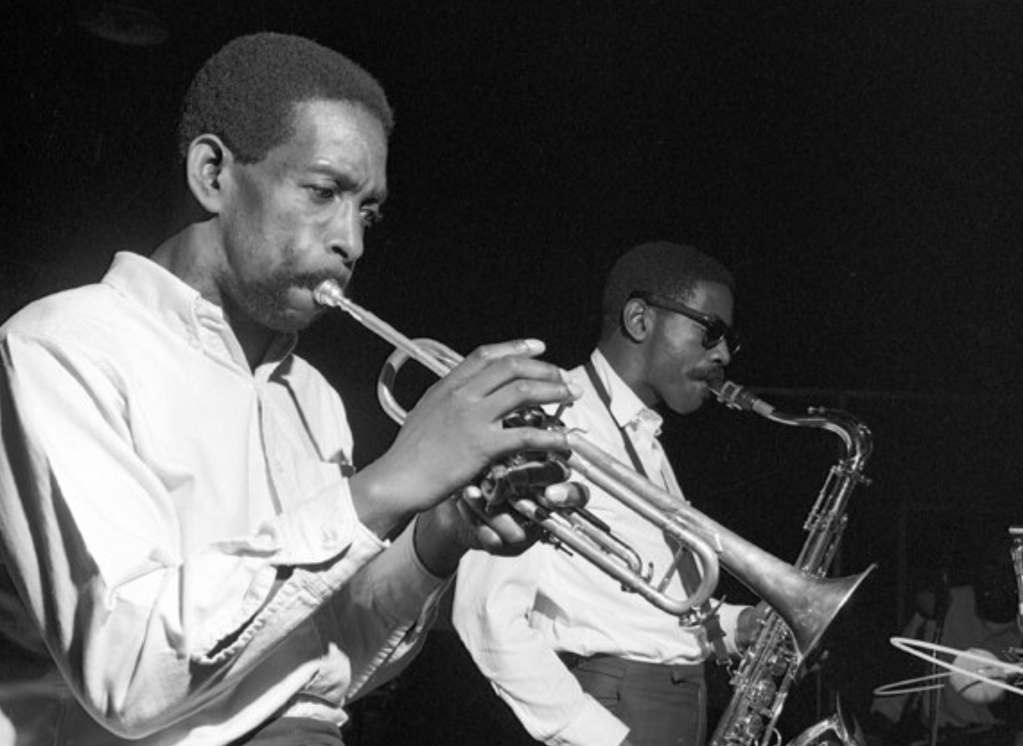
    Dorham and Henderson during the recording of Trompeta Toccata

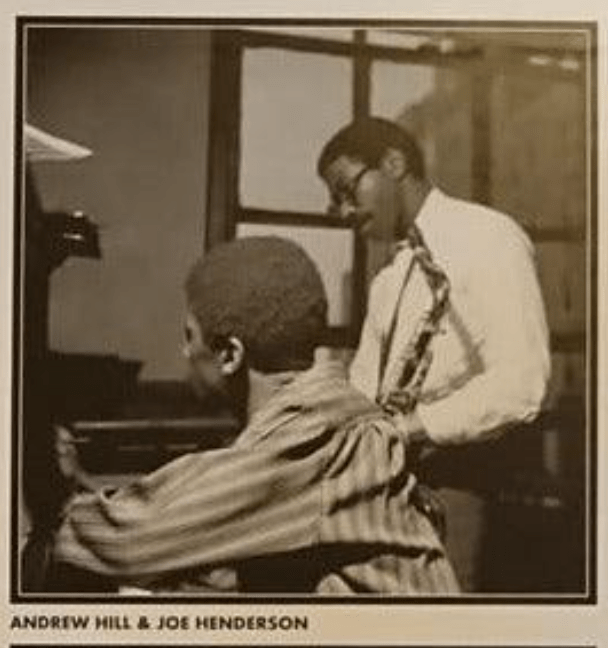
    The most distinctive voice on the record is perhaps pianist Andrew Hill. Jazz piano playing in this period was moving in a number of varied directions, the traces of which are largely evident in the music today. On the one hand, it was becoming formalised and drawing more and more from European classical music thanks to the immense influence of Bill Evans and Herbie Hancock. McCoy Tyner, aside from any specific technical or chord voicing innovations, brought an open and spiritual dimension. Thelonious Monk had already made his immense stylistic mark on the music by the ’60s, though his best selling records were yet to come. Chick Corea and Keith Jarrett were soon to emerge. In a way one can hear pianists grappling with the sound of the ‘new thing’ unleashed upon the world by Ornette Coleman and the question it poses for what the role of the harmonic instrument should be in a style which was unleashing freedom upon the melodic and rhythmic dimensions. Hill’s style can be understood as one potential answer to this question.

    There is a sense in which Hill’s style, in this period especially, is a deconstruction of all that came before. You can hear the history of jazz piano in his sound, but in an almost postmodern sense: he runs ‘bebop-like’ lines but not tied to the harmony in any recognisingly bebop way… he uses percussive clustered chord voicings like Monk but he seems to always be working across the beat rather than deeply embedded in it… he simultaneously catches all the hits and wrinkles of a piece when comping, but his solos are often strangely impressionistic.

    Hill leaves his mark on the record immediately as the first track Teeter Totter begins with a piano solo. It is a brilliant encapsulation of Hill’s playing: cascades of tonal clusters and broken intervals interspersed with knotty 8th note lines with polyrhythmic left hand accompaniment. Hill is often compared to Thelonious, with the common quote being that he was ‘Monk with technique‘ (I’m certain these people haven’t tried to play a Monk transcription note for note). The superficial similarities are there, but perhaps their greatest difference is the mood they bring to any performance they are a part of. There is a cerebrality to Hill and a grave seriousness he seems to bring to the music, where Monk brought joy and humour. Hill steers the music towards darkness, intensity, conviction and the band seems to embrace it and run with it.

    Henderson’s playing is remarkably fully-formed even that this early stage of this career. All his Hendersonisms are firmly in place: the muscular fluency of the faster passages and use of melodic cells and motif development, his use of harmonics and overtones, his perhaps most iconic technique of using of repeated 4, 5 and 6 note groupings in fast flurries. The way he blasts through the title track, with it’s sudden changes from double-time 4/4 to 6/8, points to future players like Michael Brecker and Chris Potter in the way they are able to bend compositional quirks to their will through their sheer force and agility.

    Any discussion of tenor saxophonists in this period inevitably invites comparisons with the towering figures of the time. John Coltrane, of course, looms largest, and by 1963, he and his Classic Quartet had already produced several canonical recordings. Wayne Shorter had yet to join Miles Davis or release his most celebrated solo albums, but his work with Art Blakey already marked him as a major voice. Meanwhile, players like Hank Mobley and Sonny Rollins, sometimes unfairly dismissed as ‘lightweight’ for various reasons, seemed to have receded in perceived relevance by this moment. Joe Henderson occupies a particularly intriguing space in this landscape: his records were more accessible than Coltrane’s, but his playing could be every bit as fearsome as Trane or Shorter’s. Within a year, both Henderson and Shorter would take Coltrane’s rhythm section for a spin, on Inner Urge and JuJu, respectively, creating some of the most impactful jazz of the mid-1960s.

    On Teeter Totter there is a wonderful series of traded fours between Henderson and drummer Pete ‘La Rocha’ Sims. Not only are Sims’ improvisations wonderfully lucid and his time feel immaculate, but Henderson’s contributions demonstrate how his rhythmic sense is as much part of what makes him compelling as much as his melodic one.

    Sims, a little like Joe Chambers, goes under-appreciated compared to the other greats of ’60s jazz drumming. But this record, as well as Henderson’s debut record, are a great showcase of his abilities. He moves with ease between burning swing pieces like Our Thing or Homestretch (from Page One), but particularly thrives on the Latin-infused pieces. This isn’t a surprise given apparently he earned his nickname ‘La Rocha’ from his time playing timbales in Latin bands.

    It’s fun to hear how his playing developed in the period between Our Thing and his appearance on Sonny Rollins’ landmark A Night at the Village Vanguard album from 1957. Sims takes an extended solo on A Night in Tunisia which is full of invention and melody, if perhaps a little loose on occasion. By 1963 his sound has truly settled, he incorporates far more bass drum in his phrases and overall seems to have carved out a unique voice. Elvin Jones, who also features on the Rollins record, follows an even more pronounced trajectory. Compare the Vanguard live record to something like John Coltrane’s Afro Blue Impressions live recordings from ’63 and it sounds like a completely different drummer.

    Eddie Khan is an interesting inclusion on bass. He does not have an extensive discography, in fact he seems to disappear from the scene by 1965, but he contributes a great deal to Our Thing. On the tune Pedro’s Time especially he plays a very interactive role, mixing walking lines with drones and 5th harmonies. Especially during the piano solo he uses the space to play some very adventurous counter-melodic ideas. His style is well suited to the ‘new thing’, particularly his use of pedals which sounds indebted to Charlie Haden. Khan would go on to appear on a number of future-looking records of the time including a personal favourite, Jackie McLean’s One Step Beyond featuring a young Tony Williams.

    Shortly after this recording session Henderson and Hill would reunite on the pianist’s record Black Fire, probably my favourite of Hill’s. Henderson shows again how well his muscular melodic approach is suited to Hill’s angular and difficult compositions and they would work together again on the celebrated Point of Departure.

    Andrew Hill’s Black Fire featuring Henderson. Another fun aspect to this record is to hear Roy Haynes grappling with Hill’s idiosyncratic (in the best way) compositions. The way he managed to keep on top of the rapid changes in the music while also retaining his distinctive sound is amazing to hear.

    Within a year of Our Thing, Dorham and Henderson would go on to record Trompeta Toccata and In & Out, respectively. Though their collaboration was relatively brief in the context of their broader careers, it marked a particularly fruitful period for both artists, yielding a series of vital recordings and enduring standards. Blue Note’s recent release of Forces of Nature, a live session led by Henderson and McCoy Tyner, has prompted a welcome re-evaluation of late-’60s acoustic jazz… a conversation taken up with wonderful insight by Ethan Iverson in his review of the record. I urge anyone reading to return to Our Thing in the same spirit.