referent

Tag: rock

  • My top 100 albums: 100 to 96

    I’ve kept a Last.fm account since my uni days. It’s truly one of the great holdovers of Web 2.0…  a place where you can still find like minds, explore new bands, and give and take recommendations. If you’re looking to move away from Spotify etc. but worry you’ll miss the data collection and yearly summaries, I heartily recommend Last.fm. It has all the charts and infographics a music nerd could possibly want, plus some fun third-party extras:
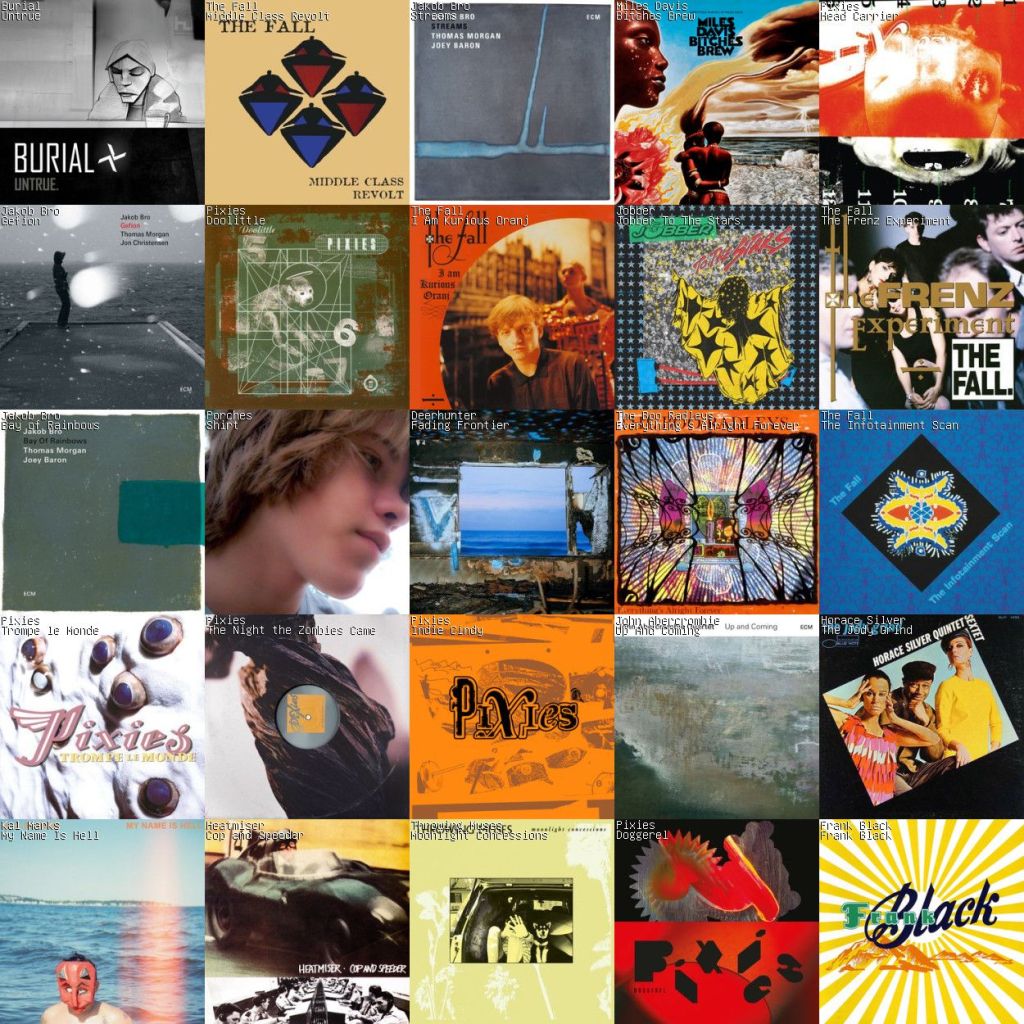
    Tapmusic.net can generate fun collages from your Last.fm data, for example

    So now I’ve collected a stack of data on my listening habits I might as well put it to good use! I’ve collated my top 100 most listened to albums of the last decade plus. My only rule: no doubles from a single artist or band… otherwise this would mostly be me discussing the discography and bootlegs of Pixies…

    Anyway, let’s get started.

    100. Bill Evans – Everybody Digs Bill Evans
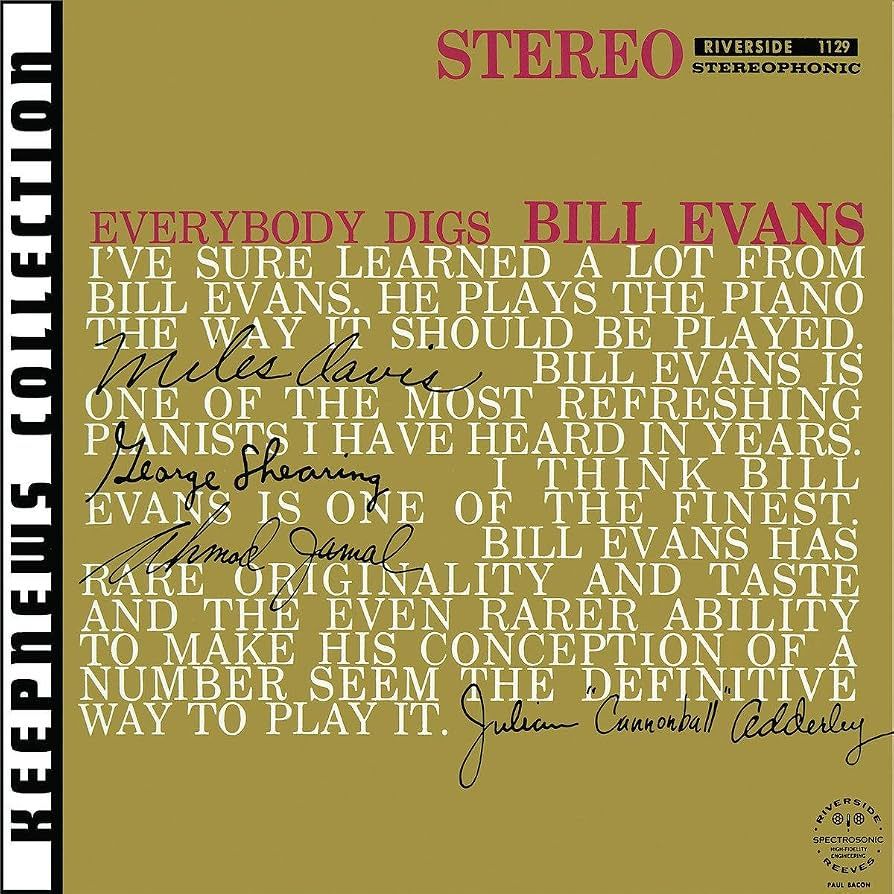
    Everybody Digs is generally considered a little lesser than Portrait in Jazz, Explorations and the legendary live recordings Waltz for Debby and Sunday at The Village Vanguard which came immediately after it. I’ve written a little about those live albums when I discussed Paul Motian’s Misterioso… I love those records but for Evans, it’s Everybody Digs which I find myself returning to most.

    There are two main things I love about the record. Firstly, the way Evans plays when paired with Philly Joe Jones on the drums. On tracks like Minority and Night and Day Evans sounds so futuristic for 1958. Having Philly Joe behind him lets Evans engage in some of his most adventurous and aggressive (in the best way) rhythmic playing. For someone’s whose reputation was for “crystal notes (like) sparkling water cascading  down from some clear waterfall” (Miles Davis), Evans is phrasing like a fusion guitarist at points on these tunes. Evans himself even discussed this in interviews: “We had a particular thing going with Paul and Philly and me together as the rhythm section. I play differently with Philly“

    Secondly, it is the tone poem Peace Piece. Though some might regard it as a filler on an album which contains incredible ballad playing and the aforementioned burning swing tunes, it was a recording which opened up worlds for me as a young listener. Even now, it only takes a few seconds for me to be transported into the room with Evans himself. The fact that it was somewhat of a ‘mistake’, in the sense that it was meant to be an intro for the tune Some Other Time just added to the mystique of it.

    99. Palehound – A Place I’ll Always Go
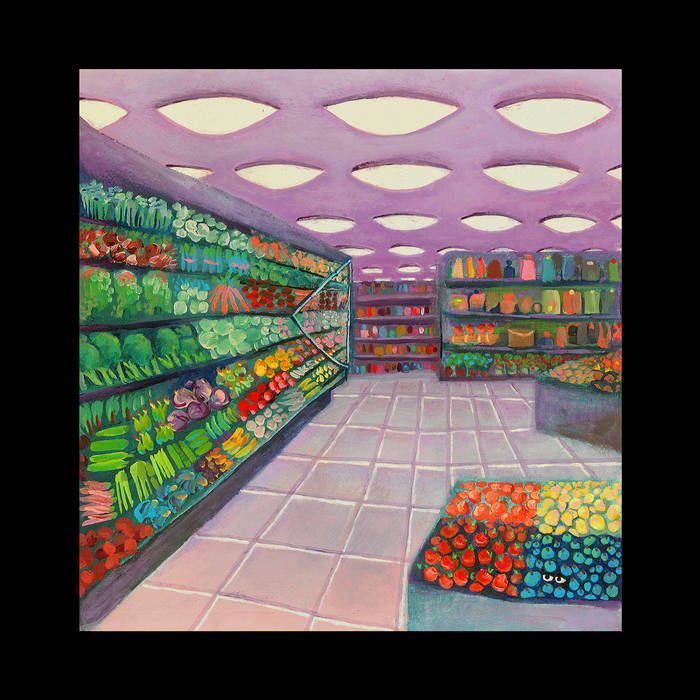
    This was a big record for me when it came out. 2015-19 was a pretty fertile time for introspective, melodic indie music, seeing the arrival of artists like the early Mitski, Big Thief, Girlpool, Jay Som and Alex G’s first bigger label work. The two records which resonated with me the most from this scene were Alex G’s Beach Music and Palehound’s A Place I’ll Always Go.

    Lyrically it’s a heavy record, dealing with loss and new love. But what I really enjoy is the lack of melodrama. Instead, Kemper is understated, weaving together evocative sketches and scenes. Turning 21 is a great example, which reads as a letter to friend. Family updates and life events are interwoven with the refrain ‘but you will always be a week away from turning 21′. Suddenly we’re addressing a ghost or a memory on all the things they’ve missed out in, from the big family events to to mundane work updates. I really respect the way Kemper is able to wade into such emotionally turbulent waters without being cloying or resorting to melodrama. The prose is all the more poignant because of its fragmented nature.

    What I love most on this record, though, is the meat and potatoes stuff… the melodies, chords, the guitar playing. The songs are steeped in ’90s inflected chord changes and melodies. Kemper cites Elliott Smith, The Breeders, Pixies as influences. She was also mentored by Sadie Dupuis of Speedy Ortiz. As far as I’m concerned those are gold standard influences, but Kemper also has a remarkably distinctive harmonic and melodic sense on this record, one in which she is able to wield some pretty sophisticated tools to write songs which sound effortless.

    98. Lee Konitz – Three Guys
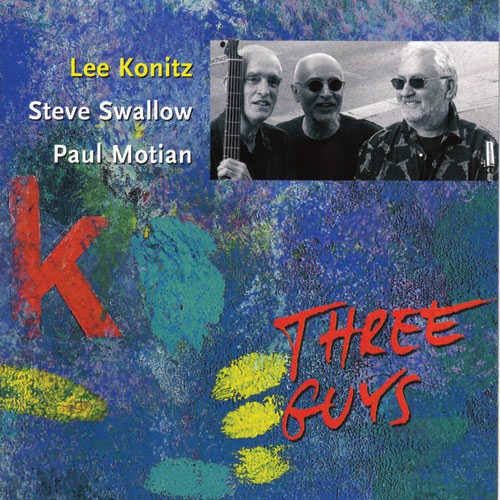
    The wonderfully dated album cover

    I wouldn’t think too many people would cite this as their go-to Lee Konitz record. I came to this delightful record via Paul Motian. At the time Konitz was not someone who I had spent a great deal of time with… but since really connecting with Three Guys, I’ve since come to love a number of albums Konitz features on, from Kenny Wheeler’s Angel Song and Jakob Bro’s Balladeering to Ethan Iverson’s Costumes are Mandatory.

    What all of these records have in common is that they are quite late in Konitz’s career… all post-age 70. Jazz records by elder statesmen have always been favourites of mine: be it the 2000s Wayne Shorter Quartet, Motian’s music, the Billy Hart Quartet, Bobo Stenson and more.

    Three Guys features Konitz, Steve Swallow on bass and Motian on drums. The sax-bass-drums trio was one Konitz was best known for, with his 1961 album Motion often considered an all-timer. Three Guys caches the trio midway though a European tour, each musician contributing compositions.

    I love ’90s Motian so much and he brings a lot of the sound of his other famous trio with Joe Lovano and Bill Frisell to this encounter. Steve Swallow is particularly suited to the chordless trio also, playing some incredibly melodic bass. Konitz is so effective in these settings, with his unique harmonic sense and individual phrasing. For a group of old hands at times playing some decades-old compositions, the music feels so fresh and spontaneous and fun. There’s a levity to this group which I think the wonderfully dated album cover captures.

    A highlight for me is the Ornette Coleman-like Ladies’ Wader, which I assume is named after waterproof pants, and Johnny Broken Wing which I’ve touched on in my blog about Motian’s Misterioso album. On the original recording from 1986 it was a melody without chord changes, whereas this time around Swallow augments the piece with gentle triadic bass chords. It’s a nice twist, and perhaps a tribute to Jim Pepper who played the original melody and by this stage had passed away.

    97. Paul Dempsey – Strange Loop
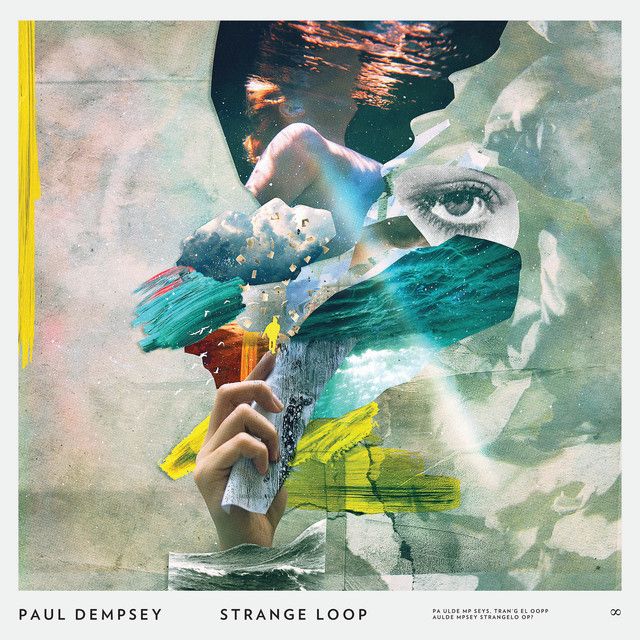
    Strange Loop might be Paul Dempsey’s most masterful collection of songs. While Something For Kate’s Echolalia may have the most cultural purchase, very much the sound of Australia circa-2001, and Everything Is True perhaps containing his most enduring individual songs, to me Strange Loop is his masterpiece.

    He has always been an ideas-oriented songwriter, unusual time signatures, chord changes and odd forms hidden beneath attractive songs about science fiction, existentialism or 21st century subjectivity. For me it’s one thing that places him and his projects head and shoulders above his Australian contemporaries, though it also may have prevented him having the same mainstream or international attention of some.

    Amongst these themes is the recurring motif of what I’ll call ‘authenticity’ in the face of the 21st century, postmodern condition and Strange Loop might amount to Dempsey’s final word on the topic. Where the young Dempsey made bleak proclamations like ‘curiosity killed the cat, he’s buried alongside every great mind we never had’ (Whatever You Want from Beautiful Sharks) or a rage against office smalltalk with ‘I don’t want to stand and compute, I want days and weeks to burst out of you… I am listening for dear life’ (Say Something from Echolalia), the mature Dempsey holds onto his optimism dearly… ‘my starry-eyed compass keeps a secret no starry-eyed theory could contain, and a promise she’ll keep until the true sea gathers us up in a tidal wave’ before offering us a classic Dempseyism ‘She makes the ocean seem like a drop in the ocean’. Later on the title track he ruminates on the idea of being seen in your totality, something one can’t help but see as a comment on identity and representation in the 2010s vein, in many ways a warping of the Gen X notion of authenticity which Dempsey seems to cling to: ‘there’s no photogenic feelings, no rich inner life, just a strange loop once, twice, a thousand times removed so… baby, tell me what’s so good about being understood?’

    Instrumentally, Dempsey is impressive. From what I can tell he plays everything himself, a skill set he more recently put to use on his excellent collaboration album with Bernard Fanning. His guitar playing takes a noticeable step up in virtuosity even from the later Something For Kate albums, the guitar solo on Hey History (Don’t Go Chaingin’) sounding like Brian May at the peak of his powers. The arrangements often weave vocal melodies, intricate guitar parts and synth lines immaculately, never a moment spared. It’s an album that really rewards repeated listens as you discover new ideas and flourishes each time.

    96. Two Inch Astronaut – Foulbrood
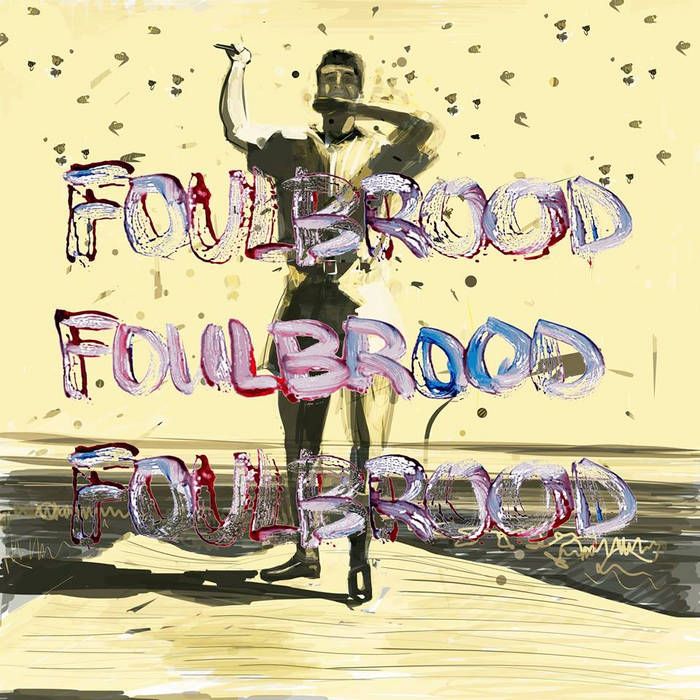
    I’ve written a little about Two Inch Astronaut before: they were a band I discussed in relation to their Live at WVAU video alongside Grass is Green and Speedy Ortiz.

    What first turned me onto Two Inch Astronaut was the excellent Audiotree YouTube channel… I was skimming through the backlogs and simply clicked. The song was Foulbrood, the title track from Two Inch Astronaut’s 2014 album and it was one of those ‘drop everything’ moments.

    Foulbrood (the song) has all the elements I love about Foulbrood (the album). Intricate songcraft, intense performances, exciting musical twists and turns wrapped up in an alt rock/post-hardcore package.

    The verse of the song would be more than enough as an instrumental track, such is the strength of the rhythm/counter-melodic guitar part. But add to that the super hooky verse melody, the Elliott Smith-like pre chorus and the cathartic chorus and you truly have a stunning piece of music.

    As an album I personally find the up-tempo or high energy numbers (Foulbrood, Part of Your Scene, Type Four, Cigarettes Boys and Movies, No Feelings, Whole Crew, Black Moon Nightstick) are the strongest parts. Across all these tunes the band shows incredible flair, from the interplay of guitar and drums, to Sam Rosenberg’s versatile vocals, moving effortlessly from falsetto to screaming. Watching him sing and play these guitar parts in live videos is always super impressive.

    Rosenberg would really hone the craft of slower and/or quieter songs on his solo albums as Mister Goblin, the highlight for me being Bunny from 2022. 

    I also want to shout out Matt Gatwood on drums, who moves easily between punk and post-hardcore without ever sounding like he needs you to notice. His parts are wonderfully integrated into the songs, locked into the strange little turns of the riffs rather than sitting on top of them. It’s only when you listen closely that you realise how much cool stuff is actually going on back there… fills, accents, little rhythmic decisions that might pass you by precisely because they serve the songs so well.
  • Listenings #6: John Frusciante – Inside of Emptiness


    For better or worse, John Frusciante always follows his muse. It led him to join… and then leave… the Red Hot Chili Peppers twice, both times at the height of their superstardom. It led him to follow up the immense mainstream success of the Grammy-winning Blood Sugar Sex Magik with two raw, almost caustic solo records in the ’90s. More recently, it’s taken him deep into challenging hip hop and breakcore-adjacent territory, allegedly going nearly a decade without seriously picking up a guitar. And around 2004–05, it led him to record and release six albums in rapid succession, probably his best work to date, bringing together a set of influences and obsessions he was likely finding hard to express within the Chili Peppers: Bowie/Reed-inspired rock, electronica, Krautrock, garage.

    In 2002 the Chili Peppers released By The Way. For non-fans this album probably represents another collection of funky rock songs about girls, California, universal love, girls and California. And yes, it is that. But to less cynical ears By The Way is distinctive in the Chili Peppers catalogue, marking a turn towards greater songwriting depth and sophistication thanks to Frusciante’s outweighed contribution. The album is awash in his Brian Wilson-inspired vocal harmonies. The chord progressions are rich. The tracks are often thickly layered in guitar effects. ‘Writing By The Way has been one of the happiest times of my life‘ he was quoted as saying upon its release. (The feeling wasn’t entirely mutual, Flea saying later he was on the verge of quitting the band due to feeling sidelined by Frusciante’s torrent of creativity during the writing and recording sessions).

    From Frusciante’s 1994 double-album Niandra LaDes and Unsually Just a T-Shirt. A collection of his lo-fi home recordings featuring raspy falsetto, reversed guitars, tape manipulation. One can’t help draw comparisons with Syd Barrett’s post-Pink Floyd solo work.

    Frusciante’s lyrics through this period, in fact beginning with his excellent 2001 effort To Record Only Water For Ten Days, are preoccupied with ideas of being, death, nothingness, rebirth. It is hard to not receive this in the context of his career trajectory, having returned to his most famous band after a number of years in substance abuse-induced exile.

    His first musical statement upon his return was the extremely successful Californication. Listening back to it in the context of what was to come shortly after (By The Way and the string of solo records) you can hear Frusciante grappling with his somewhat reduced facility on the guitar, opting for simplicity and immediacy on Californication and tonal texture via effects pedals and layering on By The Way. To his great credit he turned a somewhat diminished virtuosity into some of the most iconic riffs and guitar solos of the period… I would think, for example, many non-fans could hum his three Scar Tissue guitar solos note-for-note.

    This Is The Place from By The Way, a great example of Frusciante’s vocal layering, guitar effects and melodic writing.

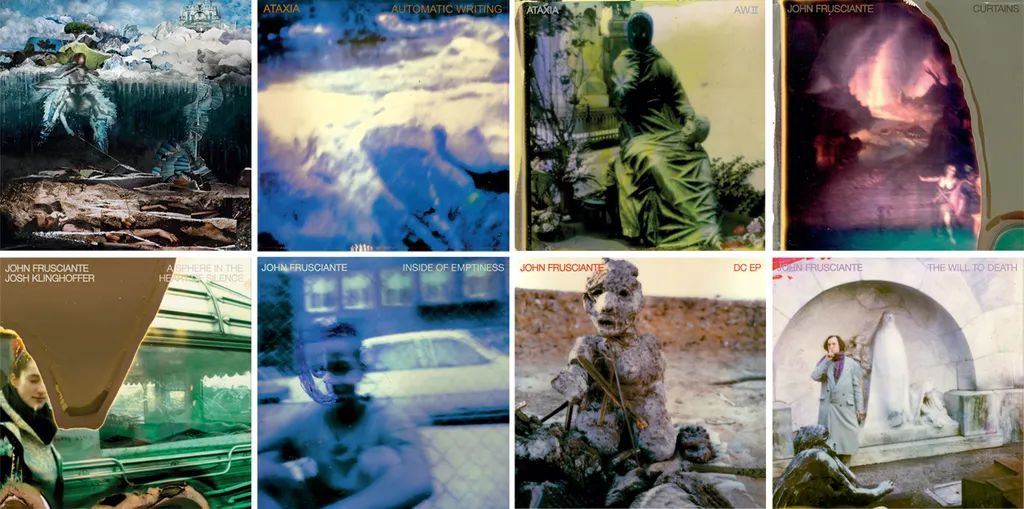
    By the time it came to 2004 Frusciante had regained his facility on the guitar, now with a suite of effects pedals at his disposal, but he had also found his voice. Beginning with Shadows Collide With People, in many ways a continuation of By The Way, and carrying on to The Will To Death, Inside of Emptiness, A Sphere In The Heart of Silence, Curtains, DC EP and Automatic Writing, he embarked on a remarkably lucid, accessible, assured yet still adventurous period of songwriting defined perhaps most of all by the strength of his vocal performances. It seems that he indeed felt reborn, as his lyrics suggested, and was invigorated by these newly honed or rediscovered skills.

    Just some of the albums or EPs Frusciante put out between 2004-2009

    Inside of Emptiness might be the most straightforward rock album of the batch. While each album contains a great number of strong songs and memorable moments, it is the nature of such a prolific output that there are some songs which are more impactful than others. Inside of Emptiness, however, feels compelling from start to finish, in part perhaps because it has a unity of focus.

    The album begins with What I Saw, which along with songs like The World’s Edge and Emptiness seem like Frusciante’s take on grunge and ’90s alt rock, genres which ran concurrently with his time as a funk rocker. After expressing a distaste for Nirvana particularly in early interviews, Frusciante has since cited Cobain as among his favourite artists. What I Saw especially contains a couple of particularly Nirvana-esque moments, particularly the pre-chorus, but never slips into imitation, especially towards the end where Frusciante gives us one of his signature guitar solos.

    Anyone familiar with the Chili Peppers’ live performances during this period, especially the iconic Slane Castle show, would recognise the What I Saw solo as following a similar approach to the one he was using with the Peppers. Frusciante tends to avoid extended, linear melodies, preferring motifs or energetic ‘guitarisms’, often repeating them four times before moving on. Even when he departs from this pattern, his solos are built around motif development, with ideas rarely discarded unless they’ve been fully mined for all their content, energy, or emotion. This gives his solos a ‘hooky’ quality, as opposed to being purely exploratory or self-indulgent. This approach makes perfect sense in a live context, where Frusciante was the sole guitarist, and with no comping behind him, repetitive, rhythmic, and catchy phrases could carry the song on their own.

    Songs like Interior Two, A Firm Kick, and I’m Around evoke mid-’60s pop, with The Beatles and The Beach Boys as clear touchstones, but there’s also a hint of ’50s doo-wop. The Velvet Underground also left their mark in two ways: first, in the breezy songwriting style of tracks like Interior Two, which recalls the later VU albums, and second, in the album’s production, which strongly echoes the raw, garage-rock feel of their masterpiece White Light/White Heat.

    The album’s centrepiece is Look On, a mid-tempo track that could easily feel like an anthem if not for Josh Klinghoffer’s disjointed, counter-punching drum part (more on his role later). Similar to By The Way’s Don’t Forget Me, it’s one of those slow burners that builds to an almost one-and-a-half-minute guitar solo… arguably one of his best on record. Here, Frusciante steps away from his usual motif development approach, opting instead for a J Mascis-like onslaught of pentatonic melodies and bends. As far as rock solos go it’s a perfect example of how energy, intent, and spirit can elevate even a simple tonal palette into something impactful.

    Josh Klinghoffer plays a significant role on the majority of Frusciante’s albums through this period, to the point that the album A Sphere In The Heart of Silence is co-credited to him. Although he is now best known for his decade-long stint as a Chili Peppers’ guitarist himself, replacing Frusciante post-Stadium Arcadium, he is an accomplished musician and collaborator outside of this context. In particular he served as primary guitarist and part-time drummer for PJ Harvey during her Uh Huh Her tour, which was a great live period for PJ.

    A Perfect Day Elise live featuring Klinghoffer on drums and Simon ‘Ding’ Archer of The Fall, Black Francis’ live band and more.

    Klinghoffer, though best known as a guitarist, takes on the role of drummer across this series of albums and does so brilliantly. His playing has the sensitivity of a songwriter, someone who really inhabits the songs, but there’s also a restless creativity in his approach to the kit. He rarely plays a straight beat, constantly breaking things up with open hi-hat stabs and off-kilter fills. One of the real joys of the album is listening to how his drumming locks in with… and sometimes pushes against… Frusciante’s guitar rhythms. Personally, I’ve found the drumming on Inside of Emptiness deeply influential; it’s a rare mix of groove, invention, and just enough disruption to keep things interesting.

    It’s interesting to contrast Inside of Emptiness, The Will to Death or DC EP, where Klinghoffer is on drums, with Shadows Collide With People, which features Chad Smith. Smith is, of course, excellent… certainly among the pantheon of great rock drummers… but compared to Klinghoffer, he tends to make safer, more expected musical choices. The result is that Shadows feels somewhat middle-of-the-road… the songs are immaculately played, the production is polished, and Frusciante reportedly laboured over every detail… yet it still comes off somewhat weaker than the albums which followed soon after.

    A Firm Kick. A relatively conventional song in the ’60s songwriting mould… listen to how Klinghoffer is able to both maintain the solid backbeat while also colouring the music with hi-hat interjections, snare rolls and fills.

    The production on Inside is very minimalistic, reminiscent of the late ’60s to ’70s. What sets it apart is particularly the drum production, which is distorted and dynamic. It reminded me a little of Sleater-Kinney’s The Woods, and in much the same way as it did with Janet Weiss it made Klinghoffer’s drum parts all the more dynamic and exciting.

    Sleater-Kinney’s Entertain. I can imagine Dave Fridmann’s production to be nightmare fuel for many producers… but I love his work here and especially on Number Girl’s album Num-Heavymetallic. The best thing to come out of the Loudness War.

    Vocally, this album captures Frusciante at his peak. By this point, he had a full spectrum of vocal modes at his disposal—soaring falsetto both in lead passages (as on the haunting Scratches) and in layered backing harmonies, alongside his ‘signature’ mid-range vibrato, most memorable on Otherside, the standout from Californication. By 2004, he’d also added a grunge-inspired rasp to his repertoire… a marked shift from the frayed, bleating voice heard on his earliest solo records.

    The album closer Scratches

    The Red Hot Chili, and by extension Frusciante himself, occupy an odd position for music snob-types (of which I am a card carrying member), perhaps best embodied by an often cited Nick Cave quote, ‘I’m forever near a stereo saying, “What the f##k is this garbage?” And the answer is always the Red Hot Chili Peppers.‘ A little like The Smashing Pumpkins, their combination of a lack of subtlety and an aversion to ’90s style Malkmusian irony make them one of the first artists a budding hipster places in their cordon sanitaire.


    Yet what the success of the Chili Peppers allowed Frusciante was the freedom to experiment and follow his muse. Whether it was the psychedelic synthpop of To Record Only Water for Ten Days, the folk rock of Curtains, or the ’60s/’70s-inspired rawness of The Will to Death and Inside of Emptiness, the music he made during this period is both consistently strong and entirely out of step with the trends of its time. It captures a child of Hendrix, Bowie, Iggy… even Elton… rediscovering his love for playing and recording with a vitality not seen since Mother’s Milk in the late ’80s. The musical wanderlust might read as naïve to some… but it was enabled by the unusual privilege of success, allowing him to make records without any real concern for marketability or whether the results came across as too earnest. These albums, and Inside of Emptiness especially, remain rewarding listens even twenty years on.

  • The Man Himself – Raspberry Ripple

    Continuing my updates of releases I’ve been involved in, here’s a new tune from The Man Himself which I had the pleasure of adding some drums to.

    Ghyti/Mr Himself has been my favourite Adelaide band for quite some time, ever since our bands played together. I think it’s the combination of adventurous yet economical songwriting, the legacy of UK pop/rock/indie present in his work which he manages to build upon and a great live set which won me over. I’ve been lucky enough to make friends and collaborate with band members over recent years and was really excited and flattered to be asked to play on some recent The Man Himself recordings including his 2023 album All Day Breakfast.

    https://themanhimselfmusic.bandcamp.com/album/all-day-breakfast

    Raspberry Ripple came out maybe a month ago and it was a really nice experience hearing it as I recorded the drums quite some time ago and my memory from that period is quite hazy. What I do remember is that we hadn’t played it much live or in rehearsal, so I was contemplating a number of approaches I could take in the session. In the end I went for somewhat of a Ringo-inflected mambo beat and I really like how it came out in the end. I had some fun at a recent gig incorporating a shaker part while keeping the mambo in the left hand and feet.

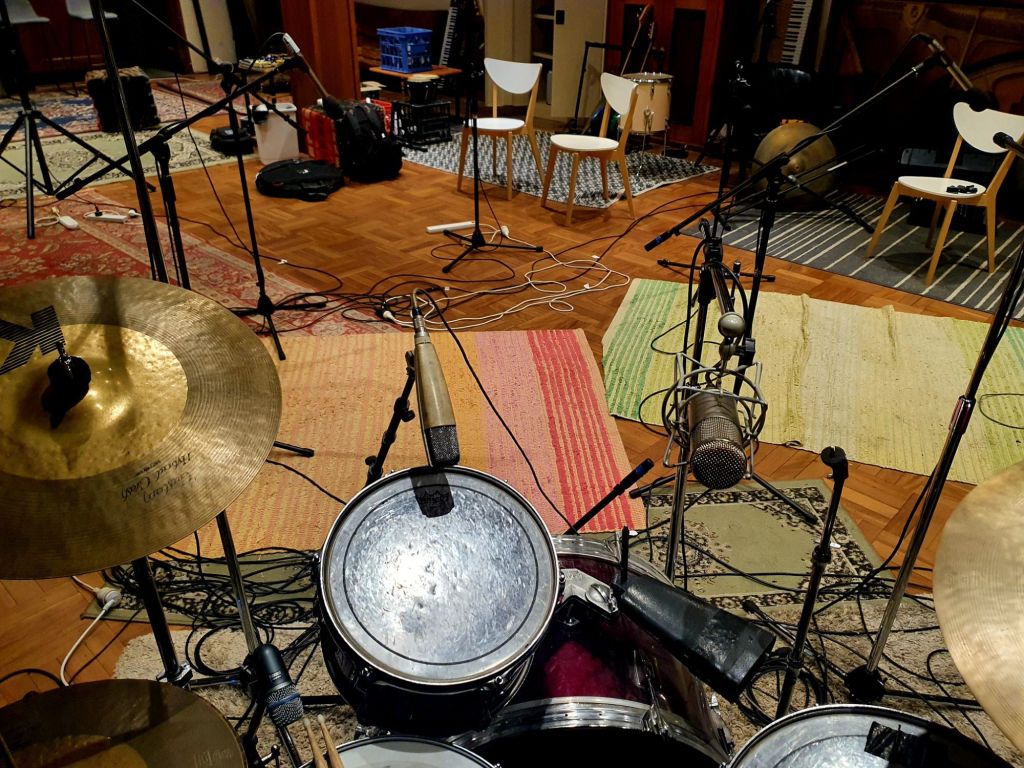
    The recording was made at the sadly closed Electric Ant Studio in a wonderful old basement bar room. I had a lot of great experiences jamming in that space in probably the 2020-2023 period.

    The recording set-up at Electric Ant Studio
  • Dean Forever – Greatest Once single, maybe more??

    I’ll start with a bit of what I’ve been writing and recording in the last couple of years.

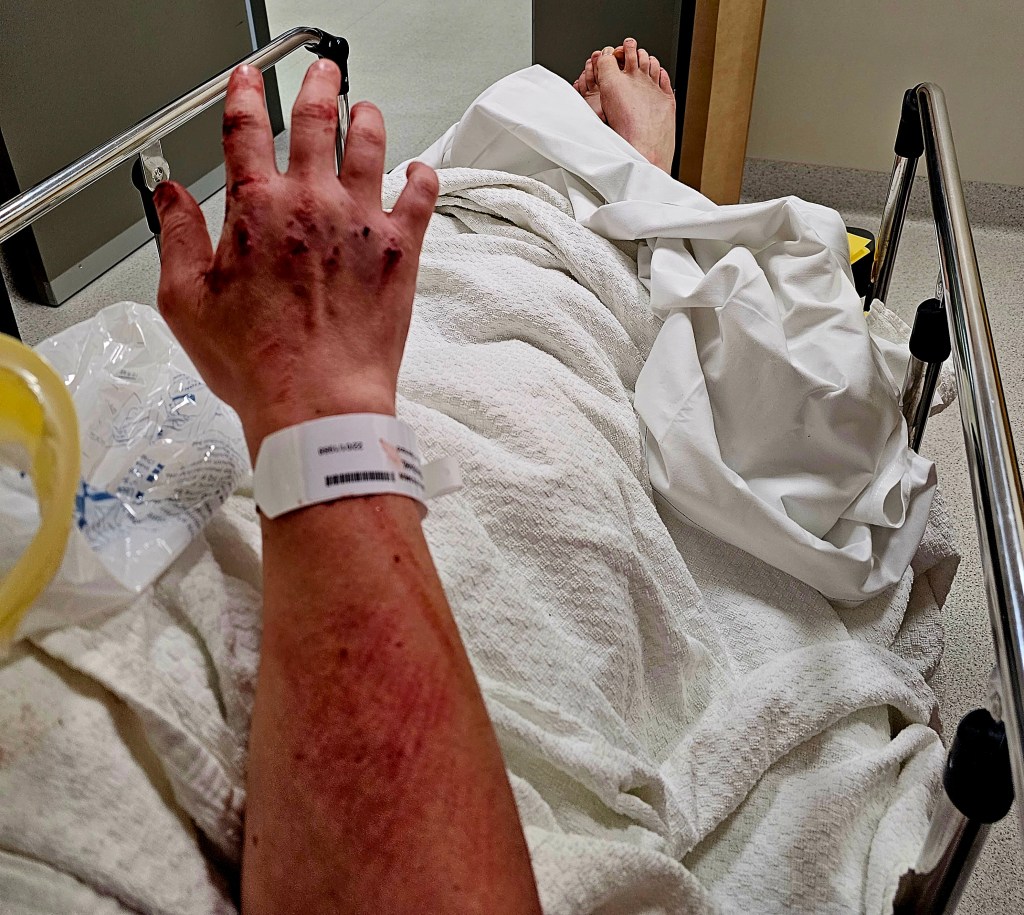
    For some context, the original music side of my life had hit a bit of a speed-bump in the last 18 months or so. I had quite a bad cycling accident (see gory photo) which put a real hold on things. Shattered teeth, broken arm, bruised brain etc. So I figure I might start this blog thing with a drip feeding of the work and projects I have managed to get involved in, in the recent past.

    DEAN FOREVER is an original music project where I’ve been songwriting and doing the multi-instrumentalist thing. Just prior to my accident we did a lot of recording and turned out the tune below, ‘Greatest Once‘.

    From my perspective, I was trying to evoke a little of the indulgent and maximalist parts of mid to late-1990s pop/rock/art-pop. There’s clear references to the Shoegaze sound in there, but also the way a band like Curve would blend electronic and proto-Trip Hop aspects into that world. Production-wise it was a very ‘yes, and… ‘ approach, always looking to add more. A reference here is Oasis and their oft criticised third album Be Here Now, which is rightly identified as the product of a band with unlimited resources but little discipline. Another reference, although I can’t hear it now, was Spaceman by Babylon Zoo, a wonderfully absurd and somewhat awkward epic that nonetheless probably anticipated some of the guitar and production sounds of the early 2000s and has a chorus that runs through my head on many occasions.

    There are a few albums of that period which capture a similar mood… ‘Machina’ by The Smashing Pumpkins comes to mind, or even some moments from The Sebadoh… the sort of awkward collision of the always-in-the-red loudness war and the idea that one escape route from the hedonism and counterculture-made-mainstream of the mid-’90s was to double down. Push the mix so hard the music became a cloud. Find an even bigger chorus. Replace Loud-Quiet-Loud with Loud-Loud-Loud. The end result at times was a return to the impressionism of the Shoegaze sound these bands made nods to but ultimately attempted to leave behind.

    Well, as someone too young to have really understood that music at the time, I actually really enjoy this sound despite the protests of my Elder Millennial and Gen X friends. We know in retrospect that these bands lost momentum, evolved into other projects or made way for copycat acts who dialled up the sentimentality in anticipation for the coming personal-as-profound and/or nostalgia-drenched music that dominated the early part of the next century. Nonetheless, I think there was something interesting that they were trying to do, so that became a bit of a reference point in my mind for this session.

    How’s that for a way of excusing an overcrowded arrangement on my part?

    We recorded a lot more in this session, so hopefully more music will be coming soon on the DF front.